
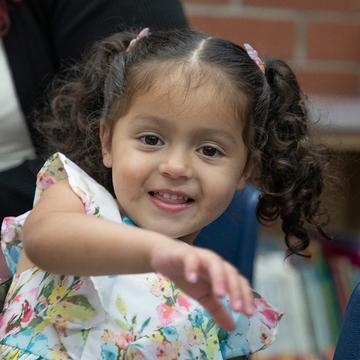
Tatiana at a Elementary School in Washington
U.S. Education Programs
Importance of Early Learning
Did you know that nearly 90% of a child’s brain is developed by the time they turn 6? Yet children from low-income families hear roughly 30 million fewer words by age 3 and can enter school more than 18 months behind their more affluent peers. In fact, millions of kids living in rural America don’t own a single book. That’s why early learning opportunities—including at-home resources—are so critical for children, regardless of their family’s income.
Our education experts work across rural America, providing early learning opportunities through Early Steps, Early Head Start and Head Start programs. Our school-age programs provide supplemental support to struggling readers during school, and in afterschool and summer settings. These programs are proven to accelerate achievement for at-risk children and have been replicated in more than 100 communities across the country.
The education component of these programs helps children develop socially and emotionally while addressing the large gaps in school preparedness and readiness that can be linked to family income. Comprehensive social service offerings help entire families improve their situation and better support their youngest members.
Explore Our Child Education Work in the U.S.


Advocate for Early Education Funding
Congress is building next year's federal budget – and child care and early education funding is on the line.
Join Save the Children's political advocacy arm, Save the Children Action Network (SCAN), and Tell Congress: Protect Head Start and the Child Care and Development Block Grant (CCDBG).