
On World Food Day, We Must Take Real Action on Global Malnutrition Crises
This World Food Day, Save the Children is calling for renewed action to ensure every child has access to the food and nutrition they need to survive, learn and thrive.
This World Food Day, Save the Children is calling for renewed action to ensure every child has access to the food and nutrition they need to survive, learn and thrive.

As cases of Ebola in the Democratic Republic of the Congo (DRC) eclipse 8,000 and child deaths approach 1,000, Save the Children is calling for increased investment in child-focused response measures.
Save the Children and its political advocacy arm, Save the Children Action Network (SCAN), applaud the introduction of the Newborn Essentials Support Toolkit (NEST) Act in the Senate.
More than 26,000 people in Somalia are expected to fall into catastrophic levels of food insecurity in the coming months, just one step away from famine.
An increasing number of children in the Karamoja region of Uganda are arriving at health clinics malnourished.
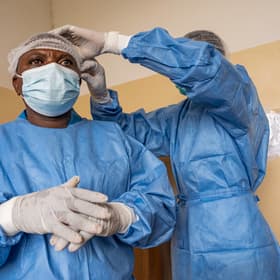
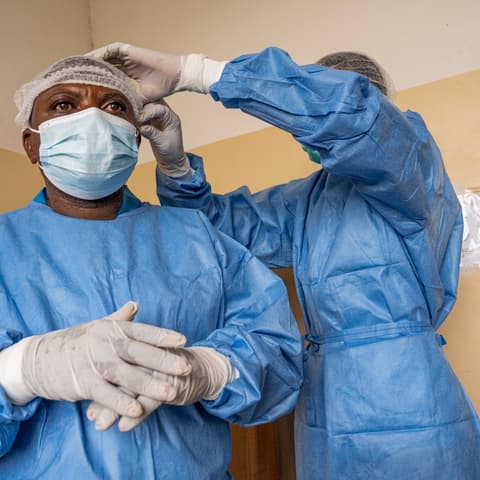
Jules* is a 42-year-old head nurse in Ituri. He and his team are working to prevent the spread of Ebola at the health centre. They have introduced screening at the entrance, handwashing stations, mask use and physical distancing, while also raising awareness about the signs and symptoms of the disease.
Jules* explains that Ebola puts young children at serious risk facing both the direct threat of infection and the indirect consequences of the outbreak on their health and survival.
Save the Children has been supporting the Health Centre for several years. Since the Ebola outbreak was declared, the organisation has scaled up its support, supplying protective equipment, screening tools, and hygiene materials to help limit the spread of the virus.
As the Ebola spread continues through Ituri province in the Democratic Republic of Congo, a Save the Children-supported head nurse is documenting daily life on the frontlines.
At least 189 children have died in the latest Ebola outbreak in eastern Democratic Republic of the Congo (DRC).[1] Thousands more are living with fear and trauma and in need of mental health support, Save the Children said.
Using puppets, songs and musical statues, children as young as four in the Democratic Republic of Congo (DRC) are to be taught about Ebola in a new program aiming to tackle misinformation and Ebola denial, and protect families.
Donors and aid organizations including Save the Children have announced a commitment of USD $500 million today to ramp up the fight against child malnutrition in the world’s biggest humanitarian hotspots.

Children are among the most vulnerable group in the Ebola outbreak in the Democratic Republic of Congo (DRC).
Save the Children is rushing to contain an Ebola outbreak in the Democratic Republic of Congo, where decimated healthcare systems are ill equipped to stop its spread.
Hard-won progress toward eliminating malaria in Zimbabwe is being reversed following cuts to foreign aid, with malaria cases and deaths surging across the country, on the eve of World Malaria Day.
The first shipment of vaccines to South Kordofan in nearly three years will restore lifesaving immunization services to children and communities cut off from essential supplies due to conflict and siege, Save the Children said.
The United States Agency for International Development (USAID) selected a consortium of partners, led by FHI 360, to lead the Inspire Social and Behavior Change (SBC) Activity, the agency's centrally funded flagship SBC award.
The first cargo flight carrying critical drugs and medical supplies has arrived in Blue Nile state.

World leaders convene on 22-23 September for the 2024 Summit of the Future in New York to accelerate action on the Sustainable Development Goals (SDGs) and other global challenges. Children from rural and poor families are increasingly being left behind in global development according to a new report by Save the Children.
Following the confirmed case of polio in Gaza, aid agencies and medical professionals joined forces to call urgently for a ceasefire to allow life-saving polio vaccinations to be administered to about 640,000 children.
Cases of the potentially deadly mpox virus have skyrocketed about 75-fold in children and young people under the age of 19 in the most severely impacted province in the Democratic Republic of Congo so far this year, Save the Children said.

A humanitarian worker in Yemen shares her story of resilience. In the midst of Yemen’s five-year war, she is fighting to help her country survive the COVID-19 pandemic.

Save the Children provides emergency relief and vital programs for girls and boys in Vanuatu. Learn more and find out how you can help.

Poverty in Libya is a serious issue. Save the Children helps Libyan girls and boys living in poverty. Donate to help children in Libya today.

Children were the hardest hit in the Japanese Tsunami. Help us respond to future emergencies and disasters by donating to our Children's Emergency Fund.

As temperatures soar across the world, extreme heat and global heatwaves are putting children’s health at risk.

A fast-moving Ebola outbreak in the Democratic Republic of the Congo is putting children and families at risk. Learn what’s happening in DRC and how Save the Children is responding.
Learn how the global hunger crisis affects children, what causes famine and food insecurity, and how Save the Children is helping families before crises worsen.

Poverty affects children worldwide and its impact is felt on countless levels. Learn about global childhood poverty and other child poverty statistics.

Save the Children works in Latin America to help children displaced by conflict and natural disasters. Donate to help children in Latin America.

This winter, as the COVID pandemic evolves, getting a flu vaccine can help keep children, families and communities healthy.

For children who have been affected by the changing seasons, the winter blues may be especially hard to manage. Our experts share tips to help.

Learn what causes malnutrition in children. Critical shortages of lifesaving, ready-to-use therapeutic food threaten the survival of millions of children suffering from acute malnutrition.

Children in America are struggling with food insecurity. Learn which states struggle to protect children the most and how COVID-19 is magnifying hunger.

In Yemen, children are dying from starvation because of a lack of food due to the ongoing war. Children in Yemen suffering from malnutrition need help now.

Save the Children’s education, health and aid programs fight hunger and help children in Guinea survive and thrive. Donate to help Guinea’s children now.

Save the Children helps children living in poverty in Liberia by providing nutrition and healthcare. Join us and donate to children in Liberia today.


Save the Children is proud to be Fiji’s leading child rights organization, working to ensure that vulnerable and marginalized children get what they deserve.
Breastfeeding awareness saves babies lives. Join us in supporting breastfeeding and get the top five facts about how nursing mothers save lives.
World Food Day 2026 is October 16. Learn why World Food Day matters, how hunger and malnutrition affect children, and how Save the Children is helping families around the world.

2.6 million children are living with AIDS. Save the Children’s prevention programs stop the spread on World AIDS Day-held on December 1, 2025 and every day.

Pneumonia, an acute respiratory infection that attacks the lungs, is a leading cause of preventable death in young children. Save the Children works to prevent and treat pneumonia in children worldwide. World Pneumonia Day is November 12, 2024.

Access to clean water helps keep children healthy. Children who lack access to clean drinking water and basic sanitation are vulnerable to waterborne illnesses. World Water Day is March 22, 2025.
Save the Children nutrition experts serve up ten kid friendly snack options that your children will love and you can feel good about.