
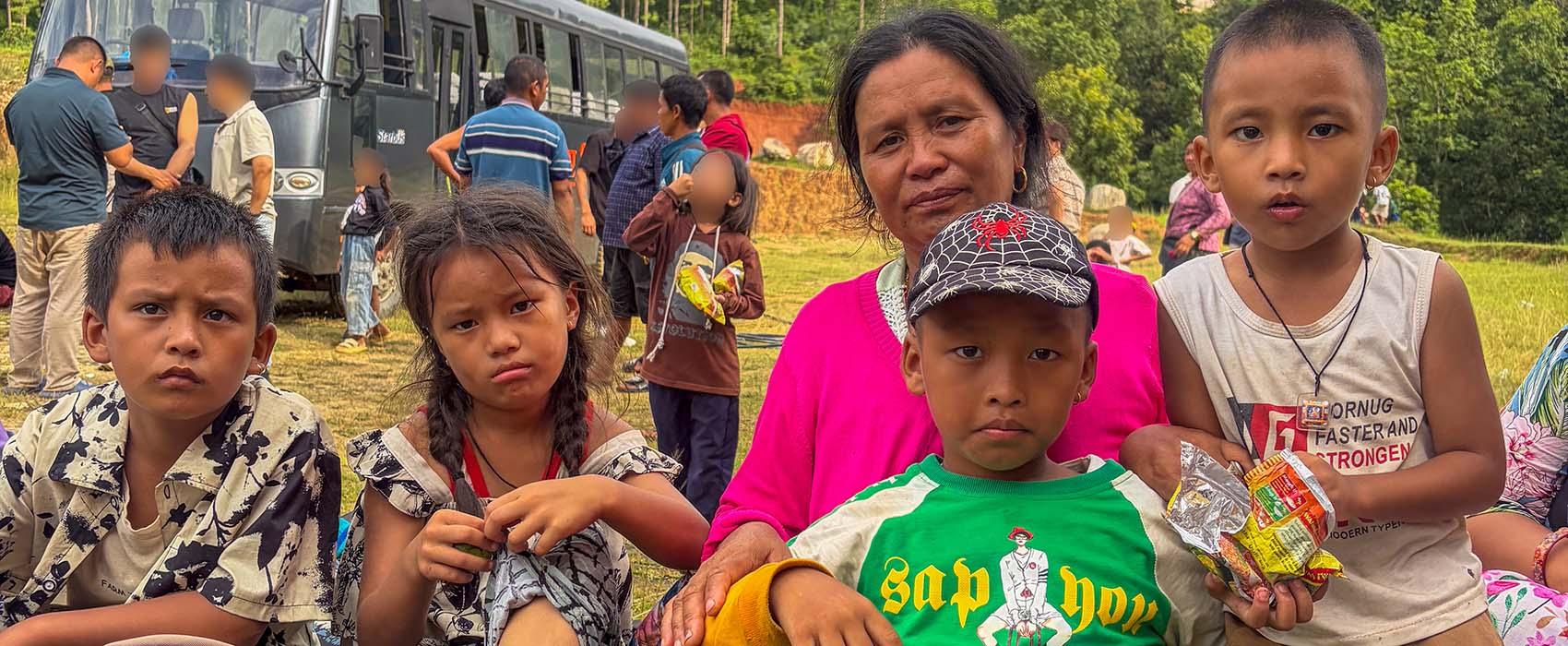
Nepal Flash Floods: What You Need to Know
- Hundreds of people have died and hundreds more remain missing following catastrophic flash floods in northern Nepal. Many people have reportedly died, while thousands have been rescued and hundreds are still waiting to be rescued, according to information from Nepal's national government.
- Children are among those still waiting to be rescued. Save the Children response teams are hearing reports from affected communities as search and rescue efforts continue. Helicopters have been traveling between affected areas and an army camp in Nuwakot as rescuers work to reach people cut off by the floods.
- Children have been separated from their families in the aftermath of the floods. Over the past 24 hours, Save the Children response teams have helped reunite 69 children with their families and guardians, with support from local authorities. Some children had been stranded at school for several days after floodwaters cut off the communities around them.
- The risk of additional flooding is adding to the uncertainty facing children and families. A newly formed lake along the Nepal-China border has raised concerns about further flooding. Glacial melt and water accumulation linked to high temperatures are also creating additional risks in some areas.
- Children are experiencing significant distress after a disaster of this scale. In addition to urgent needs such as shelter, food, clean water and health care, children need protection and emotional support as families cope with loss, displacement and uncertainty.
How the Nepal Flash Floods Are Affecting Children

Some children were stranded at school for several days after floodwaters cut off their communities, while others have become separated from their families and guardians.

Over the past few days, our teams have helped reunite 69 children with their families and guardians.

Children and families need urgent access to safe shelter, health care, clean water and protection services, as well as emotional support, as rescue and recovery efforts continue.
Save the Children US CEO Speaks with CNN About Flash Floods in Nepal
How Save the Children Is Helping Children in Nepal
Thanks to supporters like you, Save the Children has been on the ground working for children in Nepal since 1976. We aim to ensure every Nepali child has the chance to realize their rights and reach their full potential, transforming their lives, their communities and their country.
The largest child-focused charity in Nepal, we work with government ministries and partners at the local, district and national levels across the country to ensure children’s health, education and protection. In particular, we’ve helped Nepal achieve significant progress in child mortality, malnutrition and child marriage.
Given Nepal’s frequent disasters, we respond immediately when children and families are jeopardized by crisis. We also run disaster risk reduction programs to help mitigate the impact of crises and have prepositioned supplies for rapid distribution when time is essential.

Save the Children has a proven track record of using donations efficiently and effectively to change children's lives. We are proud to have received an A- rating from CharityWatch and a 4-star rating from Charity Navigator, the highest score possible from America’s leading independent charity evaluator.
This recognition reflects our long-standing commitment to ethical governance, transparent operations, and fiscally responsible use of donor support.
Nepal Flash Floods: Frequently Asked Questions
What is happening in Nepal right now?
On August 26, 2026, a catastrophic flash flood swept through Timure, Rasuwagadhi and Syabrubesi in Rasuwa, Nepal, destroying homes and lives. A sudden surge in the Bhote Koshi/Lhende river system tore through communities in Rasuwa before entering the Trishuli River, with fast-moving floodwaters then moving downstream into Nuwakot, Dhading and Gorkha. Markets, roads, bridges, hydropower facilities and other critical infrastructure have been swept away, and the full scale of the damage will take time to become clear.
How many people have been affected?
Reports from the ground indicate hundreds of confirmed deaths in Nepal, with hundreds of people, including children, still missing. The death toll is expected to rise as search and rescue operations continue. More than 400 travelers were initially reported missing, including a large number of foreign tourists, along with local residents, pilgrims, traders, transport workers, hydropower workers, and military and government personnel.
Why is this flood so severe?
The flood came without warning, at a time when many children were on their way to school or starting classes. It struck communities in steep river valleys with little time to escape, destroying roads, bridges and communications infrastructure. Rescue operations are being severely constrained by damaged infrastructure, high river levels, and difficult mountain terrain, some areas are only accessible by helicopter, and even helicopter operations have been challenging in the worst-affected areas.
How is the flood affecting children in Nepal?
Children are among those most vulnerable in the aftermath of a disaster like this, facing heightened risks to their health, safety, protection and wellbeing. Because the flood hit as many children were heading to or arriving at school, some who travel long distances from home could now be separated from their caregivers — identifying separated or unaccompanied children is an urgent priority for rescue and response teams. Children in affected communities are confused and distressed as roads remain blocked and communities cut off.
How is Save the Children helping in Nepal?
Save the Children has activated its humanitarian response for communities affected by the floods in Rasuwa, Nuwakot and Dhading. Our team is on the ground with emergency aid for 1,000 households, providing essential non-food items including tarpaulins, baby kits, mosquito nets, dignity and hygiene kits, blankets, kitchen utensils, and water and sanitation supplies. We're working with the Disaster Management Committee and other responders to reach families quickly, and we're exploring safe spaces and temporary facilities where children, women and girls can receive protection and support.
How long has Save The Children been working in Nepal?
Save the Children has worked in Nepal since 1976, partnering with government ministries and communities at the local, district and national levels to improve children's health, education and protection. We're the largest child-focused charity in the country. Because Nepal faces frequent natural disasters, from the devastating 2015 earthquake to recurring monsoon floods and landslides, we also run disaster risk reduction programs and preposition emergency supplies year-round so we can respond quickly when a crisis like this one hits.
Latest News About the Nepal Flash Floods
Updated: August 29, 2026 | This page will be updated as the situation develops.