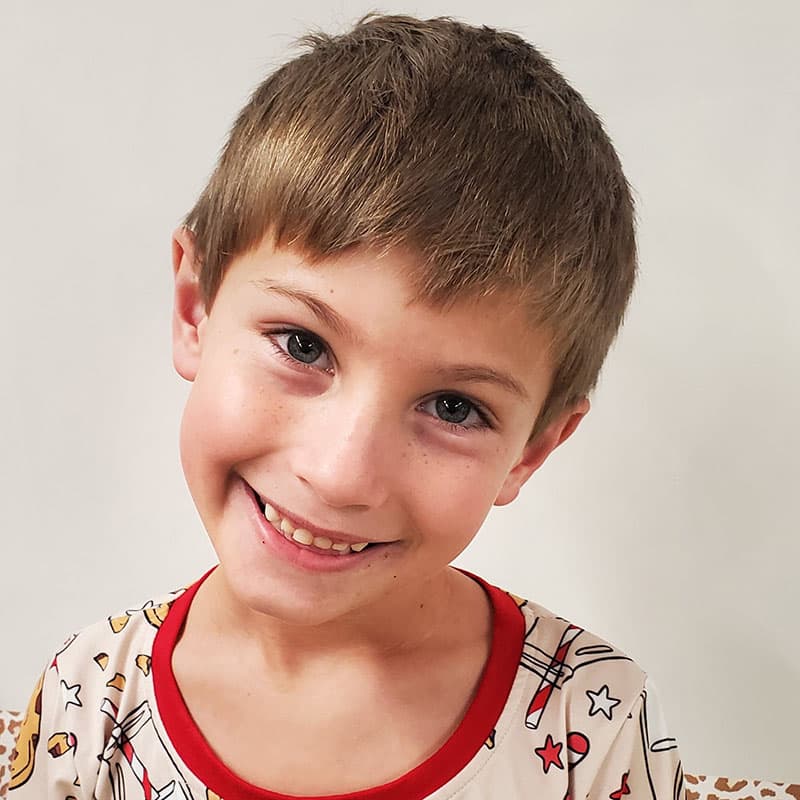
Reading below grade-level at the start of second grade, Racer has been attending Save the Children’s in-school programming and is now reading at grade level
School-Age Programs in the U.S.
The Need
Did you know that only about 1 in 3 American fourth-graders are proficient in reading? By fourth grade, if children can't read at grade level, they're unlikely to ever catch up. In math the average student is at least half a year behind and struggling to bounce back after the pandemic, even more than educators had hoped.1
The outcome is even more alarming if learners needing additional support happen to be among the 9 million American children who live in poverty, whose only hope at a brighter future is through education. Half of all low-income fourth graders score below basic levels on U.S. literacy assessments. And yet, more than 60% of low-income families can't afford to have books in their homes.
Education is a ladder out of poverty—but that ladder is often out of reach for children living in low-income households in America. These children tend to experience learning challenges due to adversities such as lack of support, high-quality learning resources, and exposure to learning opportunities that are the building blocks of education.
Rethinking Literacy & Math in the U.S.
The key to fostering a love for learning is engaging children early while improving access to and quality of education in America. Our goal is to ensure that children have a healthy, strong foundation to thrive as learners and in life. That's why we offer effective literacy and math programs to children in even the most remote rural communities right here in the United States. Our programs help children from kindergarten through sixth grade stay on track developmentally and grow as learners.
What We Do
- Supporting School Staff
Our staff provide training, resources and support schools’ needs to accelerate literacy and math growth for children facing learning difficulties. - Literacy
Our comprehensive literacy block is designed for children in K-6th grade and includes two key components: skill-building and read-aloud sessions. During the skill-building block, we emphasize word recognition skills like phonemic awareness, phonics and fluency development. During the read-aloud block, we focus on enhancing language comprehension through skills like comprehension, vocabulary and fluency. Holistically, our approach addresses the key elements of reading proficiency and instills a love for reading, setting the stage for lifelong learning and academic success. - Math
Our comprehensive math block is designed for children in K-6th grade and includes two components: math workshop and basic fact fluency. In the workshop, children engage in math talks and hands-on activities that build conceptual understanding and reasoning. The basic fact fluency block uses partner games to strengthen foundational math skills in a fun, interactive way.
The program builds confidence in math through developmentally appropriate activities that emphasize numeracy, procedural fluency, and problem-solving—critical foundations for future success in algebra and beyond. It also fosters a positive math identity, helping children see themselves as capable mathematicians. - Enrichment
The enrichment block is a 30-minute intentional & supplemental program component that is offered in afterschool and summer and is designed to foster the 4 C’s of 21st-century skills, critical thinking, creativity, collaboration, and communication. The enrichment block will provide a safe, accessible, & inclusive space for rural children to engage in experiences that cultivate a love of learning, encourage meaningful social interaction, & promote problem-solving. These experiences contribute to improved educational outcomes & introduce future career skills by equipping children with essential skills for lifelong success. - Healthy Choices
Our Healthy Choices block encourages children to develop lifelong wellness habits through daily opportunities for moderate to vigorous physical activity and engaging in weekly nutrition lessons. Each session integrates movement with learning, using vocabulary words of the week and interactive activities to promote healthy decision-making in a fun and supportive environment. In addition, children are always provided a snack or meal during our afterschool and summer programs; during this time nutritional aspects are discussed. - Family Engagement
We believe caregivers should be their child’s first and most important teacher. Caregivers play a key role as partners in supporting children’s educational success, therefore all school-age programs implemented by Save the Children integrate high-quality family engagement practices. These practices focus on relationship building, active engagement in children’s learning, effective communication, and building families’ knowledge, skills, and confidence to support learning at home. Community collaboration is another important element in linking families to community resources and services and engaging community partners to support children’s learning and success.
How Our Programs Work
- In-School Programs
To support literacy and math we provide children with small group sessions facilitated by trained partner staff. During these sessions staff provide supplemental education to build on foundational skills. - Afterschool Programs
Our afterschool program offers a safe and engaging environment where children can strengthen learning skills, explore new interests through enrichment activities, and build healthy habits for lifelong success. - SummerBoost Camp® Offerings: Our strong summer programs create a culture that is different from the school year and promotes a sense of community. SummerBoost Camps offer benefits beyond academics, fostering social-emotional growth, physical health, creativity, and confidence. Daily activities reflect a balance of academic and culturally responsive enrichment that supports whole-child development throughout the entire camp experience.
Our Results for Children
Save the Children’s programs produce stellar results for children. Student evaluations from last year show:
- Save the Children’s school-based literacy programs reached 14,994 children, and math programs reached 5,221 children.
- 76% of children from our target population achieved significant growth on their literacy assessment, and 70% of children from our target population demonstrated significant progress on their math assessment.
- Families are reading with their children on average 4 days per week & 88% felt confident in supporting their child's education at home.
What Children are Saying
"I learned how to become a better reader – I feel happy."
–Annabell, 8, Arkansas
"I like the fun that we do [at SummerBoost Camp]. My favorite thing is the STEM projects [Science, Technology, Engineering and Mathematics], and I like the reading and the math games. I’ve learned how to read better."
–Owen, 12, West Virginia
"My new favorite thing is learning. Improving my reading is important."
–Jayceon, 9, South Carolina
"I love reading non-fiction books! The more books you read the better you get at reading."
–Conner, 9, Tennessee
"Jamie [Program Coordinator] has made me feel comfortable when reading to her and always encourages me."
–Connor, 10, Tennessee
Citations:
- Gilreath, A., & Valley, J. (2023, August 29). Math Help Adds Up as Students Head Back to School. AP News. Retrieved from https://apnews.com/article/math-help-back-to-school-beec7b4c195f2b71edfd75fadd40a5b0
Learning doesn’t have to stop when school’s out. Just ask Aubrey!
We met this spunky 8-year-old at our school-age camp in Kentucky. Save the Children helped sharpen her math and reading skills to prepare for third grade. Camp also nurtured her passion for science, nature and painting kindness rocks – colorful reminders to her community to keep smiling.