
Why Knowing Isn’t Enough — How Behavioral Science is Helping Save the Children Change Lives
By: Allison Zelkowitz, Director of the Center for Utilizing Behavioral Insights for Children (CUBIC)
Why do people sometimes fail to take actions they know could improve their lives—for themselves, their families, or their communities? Whether that’s waking up early for a morning workout, putting devices down before bed, or setting aside a few dollars each month to support a cause they believe in, turning good intentions into action can be surprisingly difficult.
The same dynamic plays out on a larger scale. Many global challenges share a common denominator: human behavior and decision-making.
At Save the Children, we know that solving the interconnected issues facing children requires a deeper understanding of how people think, decide and act. That’s why in 2020, we launched the Center for Utilizing Behavioral Insights for Children (CUBIC)—the world’s first behavioral science team focused on the rights and welfare of underserved children.
By applying behavioral science—the study of how people make decisions and take action— we design scalable solutions that improve outcomes for children and families.

Roslin is a community health volunteer on the island of Sumba, where many people live in remote areas and have very limited access to healthcare. Roslin provides monthly health checks for pregnant women, mothers, newborns and infants and regular home visits for children who are underweight and need extra support.
Save the Children – in partnership with the government and local organisation the Perkumpulan Stimulant Institute (PSI) – is strengthening community-based healthcare services to ensure mothers, newborns and toddlers are closely monitored and can access the care they need to survive. We are providing training and equipment for health care workers and community health volunteers to improve the quality of healthcare services and to provide care for families closer to their homes and villages.
How CUBIC Turns Insights into Impact
For decades, nonprofit organizations, international institutions, and governments alike have designed programs and policies assuming that, if we simply provided the people we serve with good information, behavior change would follow.
Unfortunately, it usually doesn’t work that way because knowing isn’t the same as doing. Changing behavior requires much more. At CUBIC, we draw on insights from psychology, sociology, behavioral economics, and neuroscience and apply them to real-world problems.
For example, in Côte d'Ivoire, we worked to address hazardous child labor on cocoa farms. By designing and testing a community commitment model, we helped reduce dangerous child labor and injuries—demonstrating how a better understanding of human behavior can help create safer environments for children.
We follow a step-by-step process: research the problem in its local context, co-create solutions with partners and community leaders based on what we’ve learned, and rigorously test what works.
This last step, testing, is particularly important because it helps ensure resources are invested in approaches that actually improve outcomes.
To do this, we often use randomized controlled trials (RCTs)—a research method that compares outcomes between a group that receives an intervention and a similar group that does not—to help us determine whether a solution is effective, has unintended consequences, or produces no meaningful change at all.
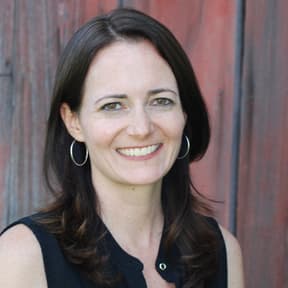
“When I first started learning about behavioral science, what excited me the most was the vast toolkit it offered: hundreds of “behavioral insights.” These evidence-based findings about how people make decisions and act in the real world help us design more effective strategies to spur change.”
~ Allison Zelkowitz, Director of the Center for Utilizing Behavioral Insights for Children (CUBIC)
The Behavioral Science Toolkit
Science can be sobering. It reveals how much we don’t know, and how frequently we are wrong. But it can also be empowering. When I first started learning about behavioral science, what excited me the most was the vast toolkit it offered: hundreds of “behavioral insights.” These evidence-based findings about how people make decisions and act in the real world help us design more effective strategies to spur change.
Research shows that behavior is often shaped by social norms, trusted messengers, and the influence of immediate rewards and obstacles. For example, people tend to look to others when deciding how to act, place greater weight on present needs than future benefits, and are more likely to follow through when a desired action is simple while putting off things that are hard.
Understanding these patterns allows organizations like CUBIC and Save the Children to design and test innovative solutions to problems facing children and families, working with human behavior rather than against it.
In addition to looking outward through this behavioral lens, we’re also looking inward to see how behavioral science can make us more efficient as an organization, and build a better and safer workplace.
Behavioral Science in Action
So how is behavioral science helping us improve outcomes for children and families? By changing how we work and what we do.
One example comes from the Philippines, where CUBIC and Save the Children worked to address low immunization rates among children and pregnant women.
Research suggested that the issue wasn't simply that families lacked information about vaccines. Many caregivers intended to vaccinate but faced everyday barriers that made follow-through difficult. Using behavioral insights, we designed and tested SMS text reminders to help turn good intentions into action, making it easier for families to keep vaccination appointments.
The project illustrates a core lesson of behavioral science: knowing what to do is often not enough—people also need systems and environments that make the desired behavior easier to carry out.
Another example comes from Afghanistan, where we worked to better understand barriers to girls' education. Our research found that 3.7 million children are out of school, 60% of whom are girls. But the challenges extend beyond access, including caregivers' perceptions about the value of girls completing primary school.
To address this, we designed and tested behavioral science-informed activities to encourage greater family support for girls' education. A RCT found that this helped improve caregivers' perceptions of the importance of girls finishing primary school. However, attendance rates remained unchanged, highlighting the role that structural barriers—such as financial constraints—can play in limiting behavior change.
This points to another important lesson: changing minds is often only part of the solution. To create lasting progress, programs must also address the practical barriers that prevent people from acting on their intentions.
CUBIC’s Impact and What’s Next
Over the past five years, CUBIC has conducted more than 60 projects across five continents, and trained thousands of our employees and partners’ staff on behavioral science. As of 2025, CUBIC had reached more than 104,000 directly and over 150 million people indirectly.
Together, we’re bringing child-centered behavioral science to large scale programs through Save the Children’s global network—creating lasting change for children worldwide.
Looking ahead, we’re exploring how to safely and responsibly integrate AI to enhance our research, learning and delivery. We’re also looking to scale solutions with partners and expand our reach aligned to the evolving needs of children and families.
Across every project, context, and challenge, we continue to learn new lessons. But one insight remains constant: Information alone rarely changes behavior.
When we design programs around how people actually think, decide, and act, we create more effective, scalable and sustainable solutions to improve children's lives.
Behavior change is hard—but behavioral science can make it a little bit easier.
Allison Zelkowitz | Director of the Center for Utilizing Behavioral Insights for Children (CUBIC)
Allison Zelkowitz is the Founder and Director of the Center for Utilizing Behavioral Insights for Children (CUBIC). She brings more than 20 years of international experience in humanitarian response, development and applying behavioral science in the Global South. Allison holds a master’s degree in international relations and Pacific studies from the University of California San Diego, and a bachelor’s degree in theater and English from Bowdoin College. A parent of two, she is currently based in Kenya.