
On World Food Day, We Must Take Real Action on Global Malnutrition Crises
This World Food Day, Save the Children is calling for renewed action to ensure every child has access to the food and nutrition they need to survive, learn and thrive.
This World Food Day, Save the Children is calling for renewed action to ensure every child has access to the food and nutrition they need to survive, learn and thrive.

As cases of Ebola in the Democratic Republic of the Congo (DRC) eclipse 8,000 and child deaths approach 1,000, Save the Children is calling for increased investment in child-focused response measures.
Save the Children and its political advocacy arm, Save the Children Action Network (SCAN), applaud the introduction of the Newborn Essentials Support Toolkit (NEST) Act in the Senate.
More than 26,000 people in Somalia are expected to fall into catastrophic levels of food insecurity in the coming months, just one step away from famine.
An increasing number of children in the Karamoja region of Uganda are arriving at health clinics malnourished.
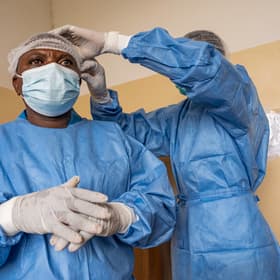
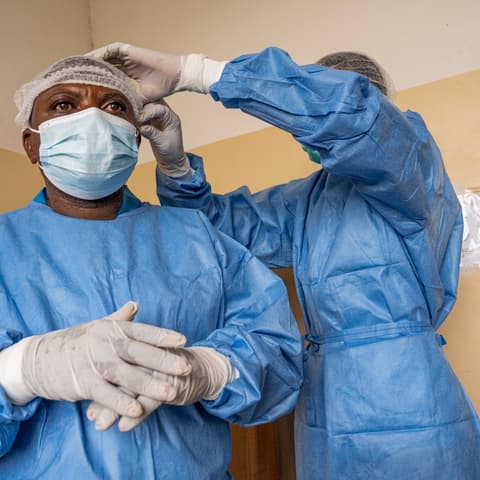
Jules* is a 42-year-old head nurse in Ituri. He and his team are working to prevent the spread of Ebola at the health centre. They have introduced screening at the entrance, handwashing stations, mask use and physical distancing, while also raising awareness about the signs and symptoms of the disease.
Jules* explains that Ebola puts young children at serious risk facing both the direct threat of infection and the indirect consequences of the outbreak on their health and survival.
Save the Children has been supporting the Health Centre for several years. Since the Ebola outbreak was declared, the organisation has scaled up its support, supplying protective equipment, screening tools, and hygiene materials to help limit the spread of the virus.
As the Ebola spread continues through Ituri province in the Democratic Republic of Congo, a Save the Children-supported head nurse is documenting daily life on the frontlines.
At least 189 children have died in the latest Ebola outbreak in eastern Democratic Republic of the Congo (DRC).[1] Thousands more are living with fear and trauma and in need of mental health support, Save the Children said.
Using puppets, songs and musical statues, children as young as four in the Democratic Republic of Congo (DRC) are to be taught about Ebola in a new program aiming to tackle misinformation and Ebola denial, and protect families.
Donors and aid organizations including Save the Children have announced a commitment of USD $500 million today to ramp up the fight against child malnutrition in the world’s biggest humanitarian hotspots.

Children are among the most vulnerable group in the Ebola outbreak in the Democratic Republic of Congo (DRC).