
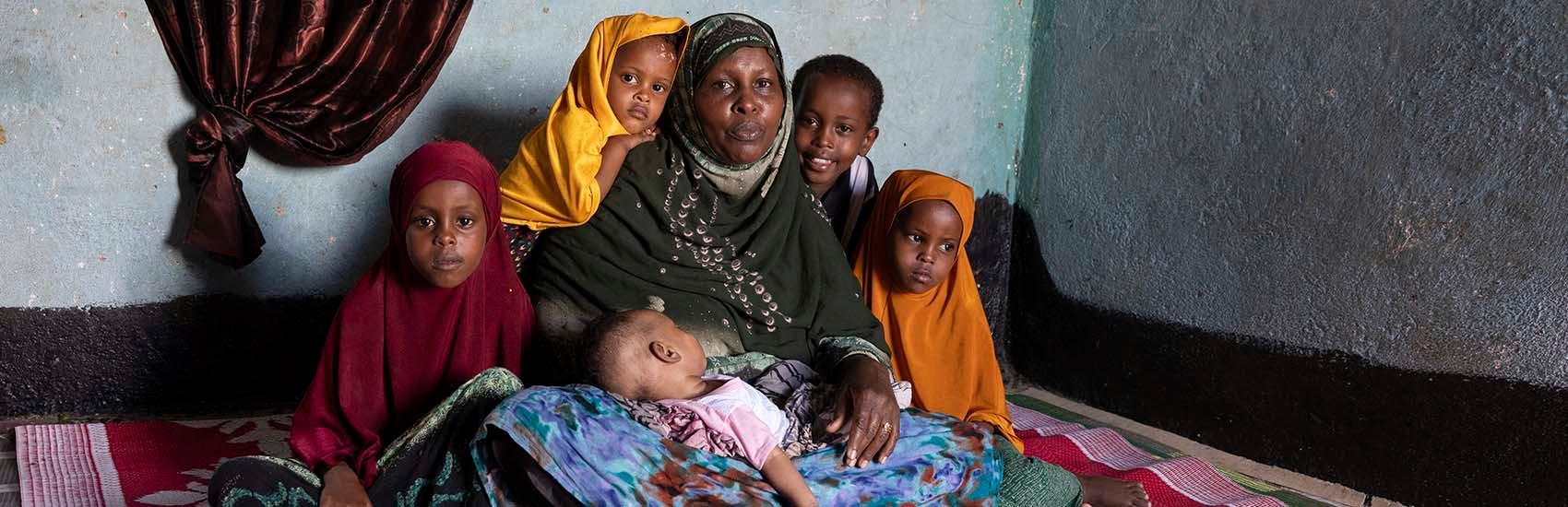
Hunger Crisis in Somalia: Children in Urgent Need
$5.4 million, about 28% of the population, are expected to face crisis levels of hunger or worse through the end of the year.
Over the next year nearly 2 million children are expected to suffer from acute malnutrition. This includes 433,000 children expected to experience severe acute malnutrition, the deadliest form of malnutrition.
26,000+ people expected to face catastrophic level of hunger between October and December, just one step away from famine.
3.4 million people are internally displaced, with more than 510,000 newly displaced in the first three months of 2026 alone.
Save the Children has been working in Somalia since 1951, delivering life-saving health, nutrition, education and protection services. In 2025, our Somalia Country Office delivered services to 3,432,403 unique individuals, including 1,902,441 children.
~2M
Children expected to suffer acute malnutrition.
28%
Of the population faces crisis-level food insecurity.
5.4M
People facing crisis levels of hunger or worse.
From Drought to Floods: What's Driving Somalia's Hunger Crisis
Somalia has endured recurrent droughts and floods for decades, and these climate shocks are growing more frequent and intense. After a failed Deyr season in late 2025, this year's Gu rains gave some families a short reprieve. It will not last. Forecasts show a high chance of above-normal rainfall across central and southern Somalia from October to December, putting families along the Jubba and Shabelle rivers at greatest risk.
Similar conditions caused the 2023 floods, which affected 2.48 million people and displaced more than 1.2 million. Fifteen years after a famine that claimed an estimated 260,000 lives, many of them children, climate shocks, conflict, displacement and funding cuts are once again pushing Somalia toward catastrophe.
The 2026 humanitarian response plan is just 29.7% funded, leaving a shortfall of about US$599 million.
Somalia's Humanitarian Crisis and the Impact on Children
- Displacement: 3.4 million people are internally displaced, including more than 510,000 newly displaced in the first three months of 2026.
- Education: 62% of school-aged children are out of school, and attacks on schools disrupted learning for more than 150,000 children in the first half of 2025.
- Disease: Measles, diphtheria and waterborne diseases are spreading, with children under five hit hardest. Flooding raises the risk further.
- Health services: More than 200 health facilities and 300 nutrition centers have closed because of funding cuts.
- Protection: Somalia recorded the third-highest number of verified grave violations against children in the world in 2024.
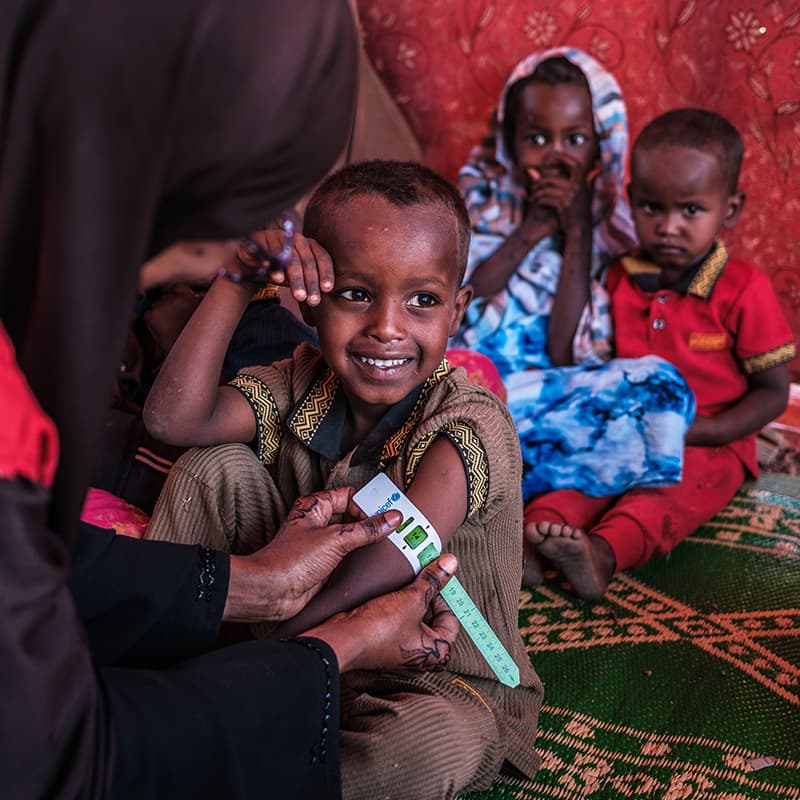
Zainab's* younger brother Abdi* is screened for malnutrition by health worker Anab, while his mother Munira*, 35, watches, Puntland, Somalia
How Your Support is Helping Children in Somalia
Since 1951, we've worked to keep children in Somalia healthy, learning and safe. In 2025, we reached more than 3.4 million people, including 1.9 million children. Your donation helps us:
Nutrition
We screen and treat children for acute malnutrition, including the most severe cases, through clinics, mobile teams and trained community health workers.
Health
We bring treatment, vaccines and maternal care to hard-to-reach communities through mobile health teams and trained community health workers.
Child Protection
We keep children safe from violence, exploitation and neglect through child-friendly spaces, case management and family reunification.
Education
We help children keep learning, including children with disabilities and those forced from their homes, by training teachers and supporting schools across Somalia.
Cash Assistance
We give families affected by conflict and climate shocks cash support to buy food, water and essentials, helping them recover and stay resilient.
FAQs About the Crisis in Somalia and How You Can Help
How is the crisis impacting children and their rights?
Children are bearing the heaviest burden of a crisis they did not create. Three million children are in need of humanitarian assistance in 2026. Across Somalia, nearly 2 million children are projected to
suffer acute malnutrition this year, including 433,000 with severe acute malnutrition that puts them at imminent risk. Grave violations of children's rights remain widespread.
In 2024, Somalia recorded the third highest number of UN-verified grave violations against children in the world, with 2,568 violations affecting 1,992 children, and 648 cases of recruitment into armed groups were verified in the first half of 2025 alone. Many children have been separated from their families during displacement, and girls face heightened risks of child marriage, exploitation and gender-based violence.
How is the crisis impacting children's mental health?
Mental health and psychosocial support needs are deep and largely unmet. Children exposed to repeated drought, conflict, displacement, hunger and loss of family members show high rates of anxiety, withdrawal, sleep disturbance, and post-traumatic stress.
UNICEF and the HNRP identify mental health and psychosocial support as critically underdeveloped in Somalia, despite the scale of trauma. UNICEF is targeting 116,000 children, adolescents and caregivers with community-based mental health and psychosocial support in 2026, a small fraction of those who need it. Without timely intervention, the long-term impact on children's learning, development and life chances will be severe.
How is the crisis in Somalia impacting children's education?
Education is collapsing. About 62% of school-aged children are out of school in 2025, up from 56% in 2024.
Attacks on and military use of schools disrupted learning for more than 150,000 children in the first half of 2025 alone.
Funding cuts forced education partners to close 477 learning spaces in 2025, and reduced enrollment by 87,000 children compared with 2024. Girls, displaced children, nomadic children, and children with disabilities face the highest barriers.
How long has Save the Children been working in Somalia?
Save the Children has been working in Somalia and Somaliland since 1951. We are one of the largest humanitarian and development organizations in the country, operating directly and through national partners across all federal member states, Banadir, Puntland and Somaliland, including hard-to-reach and conflict-affected districts. Our model combines life-saving humanitarian response with longer-term resilience, system strengthening, and child rights governance work, delivered in close coordination with the Federal Government of Somalia, state authorities, the Humanitarian Country Team, and local civil society partners.
What is Save the Children doing to respond to the rising needs of children and their families?
Our 2026 response prioritizes the highest-severity districts and the IDP settlements in the highest-severity areas in southern and central Somalia. We are scaling up integrated nutrition screening and treatment, primary and mobile health care, water and sanitation, education in emergencies, child protection case management, mental health and psychosocial support, and humanitarian cash transfers. We are pre-positioning supplies in high-risk districts and strengthening anticipatory action ahead of further drought and flood shocks. Wherever possible, we deliver through national partners to expand reach in areas where international access is constrained.
How many people, including children, has Save the Children reached?
In 2025, Save the Children's Somalia Country Office reached 3,432,403 unique individuals, including 1,902,441 children. Health and nutrition recorded 4,159,690 total engagements, education 274,143, child poverty and livelihoods 131,301, child protection 26,496, and child rights governance 104.
How can I help children in Somalia?
The most effective way to help right now is to donate. With floods expected from October to December, early funding lets us reach children before conditions get worse. Your gift can help provide:
- $35: treatment for one child with acute malnutrition for a month
- $30: emergency water for one family for a week
- $36: a hygiene kit to help a family protect against waterborne disease
You can also give monthly to support children through this crisis and the next one, start a fundraiser, or advocate for continued humanitarian funding for children in crisis.
Updated: September 30th, 2026
Save the Children has a proven track record of using donations efficiently and effectively to change children's lives. We are proud to have received an A- rating from CharityWatch and a 4-star rating from Charity Navigator, the highest score possible from America’s leading independent charity evaluator.
This recognition reflects our long-standing commitment to ethical governance, transparent operations, and fiscally responsible use of donor support.
*Unless otherwise noted, facts and statistics have been sourced from Save the Children’s monitoring and evaluation experts and from the Childhood Report. You can access detailed data here. Other sources as follows: UNHCR; Population: CIA World Factbook; The World Bank, 2016; Unesco Institute for Statistics (UIS)