
What I Saw in Sudan: A Frontline View of the Crisis — and Why the World Must Act Now
Written by: Janti Soeripto, President and CEO of Save the Children U.S. | June 18, 2026
Last month, I visited Save the Children’s programs in Sudan. It was a grueling trip, but one I felt was essential. The crisis in Sudan is receiving far less media attention than the scale of need facing children and families.
Sudan is home to the world's largest displacement crisis, the world's largest hunger crisis, and one of the most neglected. Despite staggering needs, the humanitarian response plan is only 25% funded. Only 3% of schools in North Darfur are open, and around eight million children across the country are out of learning.
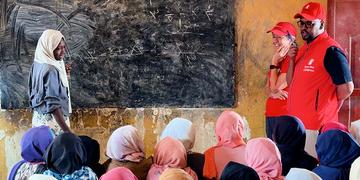
SCUS CEO Janti Soeripto visits a temporary learning space in Central Darfur supporting 2,820 displaced and out-of-school children. The space provides essential learning materials; water, sanitation, and hygiene facilities; and capacity building for teachers and PTAs, helping restore access to safe, inclusive education for conflict-affected children.
The Journey to the World’s Worst Humanitarian Crisis
It took four days to reach our first program in Darfur—traveling through three countries, crossing the border from Chad, and then driving more than 250 miles through Central and North Darfur. The effort required to get there was significant, but the journey stopped mattering the moment I sat in a small room with fifteen children in Nertiti.
There, I listened to an 8-year-old girl calmly describe losing her parents and most of her siblings in Al Fasher. She shared her story matter-of-factly, as if this were simply how life worked now. As if this level of loss had become part of everyday life.
How Aid Workers Are Responding to the Sudan Crisis
By scale of need, Sudan is the world’s worst humanitarian crisis today. Yet it remains one of the most underfunded.
Despite immense logistical challenges and shrinking resources, our teams—95% of whom have themselves been displaced—continue to operate 50 health clinics across Darfur.
I saw staff transporting medicines and vaccines across multiple conflict-affected areas, pre-positioning supplies ahead of the rainy season—when access will become even more restricted—and sustaining essential health services in places where systems have largely collapsed.
I also spent time learning about the community-led Emergency Response Rooms we support. These volunteer-run, highly localized networks are stepping in where formal systems cannot. In West Darfur alone, more than 100 of these groups are critical to people’s daily survival.
Save the Children is also supporting other locally led initiatives like community kitchens. It was deeply moving to witness volunteers coming together to cook for their community. In Tawila alone, this effort translates into delivering thousands of nutritious meals—including fresh vegetables, meat, rice, pasta and more—prepared by the community for the community, serving people who have lost so much.
We are also providing health, WASH and child protection services. Most importantly, we are working to reunite families who have been separated and offering psychosocial support and child-friendly spaces so kids can process trauma and begin to heal.
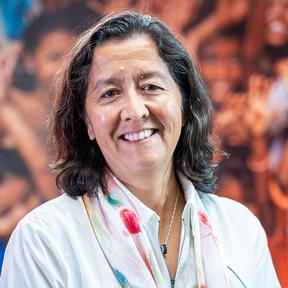
"What stayed with me most after my trip was not only the scale of need, but the impossible choices our teams face every day… And yet, even then, our colleagues continue to show up and deliver."
How Communities in Sudan Are Building Hope Amid Crisis
What stayed with me most after my trip was not only the scale of need, but the impossible choices our teams face every day: whether to maintain high-quality standards and reach fewer children or stretch already limited resources so more children receive at least some level of support.
These are not decisions humanitarian teams should make. And yet, even then, our colleagues continue to show up and deliver.
I was struck by our team’s innovative work to harness local food solutions to prevent malnutrition. This approach is not only more sustainable, but it also empowers communities and parents to support children using ingredients that are locally available and culturally familiar.
At a nutrition clinic in Tawila, I got a firsthand glimpse behind a locally produced, nutrient-rich food using five simple items: millet, peanuts, oil, sugar and a bit of salt.
Mixed together, it makes a highly nutritious version of peanut butter that young children and lactating mothers can take to prevent malnutrition. It seems simple, but it addresses a critical issue—acute malnutrition can take a child’s life within weeks.
This is also a solution that moms and caregivers can learn to make at home using local supplies to ensure children are nourished. At around $12 per month, it is far more affordable than treating a child once acute malnutrition sets in.
Sparks of hope also shine bright at Save the Children’s 45 temporary learning spaces, where we strive to keep kids learning during an incredibly difficult and uncertain time. In one of them, I saw the progress we’ve accomplished, growing enrollment from 70 kids at the start to around 400 today—teaching them math and Arabic, alongside life skills like mental health and psychosocial support.
It’s remarkable to see how eager children are to learn and their excitement as they run to the blackboard to demonstrate their knowledge of timetables or spelling.
The sound of kids playing, learning and laughing is the same the world over. But these children deserve a far better, more comprehensive education. We’re working to bring additional teachers and exploring how to transition temporary learning spaces into sustainable, permanent schools.
The Call to Act— Without Funding There Is No Response
My visit to Save the Children’s programs in Sudan gave me a clearer picture of the realities facing children, families and entire communities. We have worked in Sudan since 1991—providing education, healthcare and nutrition support to children, and food security and livelihoods assistance to families.
Today, when the need is greatest, funding cuts are putting our lifesaving work at risk.
Priority one, two and three: more funding. But smart funding directed to organizations with the footprint, community acceptance, and proven track record to deliver.
Save the Children has all three. What we don't have is enough resources to match the need.
About Janti Soeripto | Janti is President & CEO of Save the Children US, where she oversees the agency's strategy and management, humanitarian response and operational effectiveness, to name a few. Previously, Janti served as Deputy CEO of Save the Children International and held senior roles at Unilever and Kimberly Clark. A recognized leader on global humanitarian issues, she has been featured in major media outlets and was named to the 2025 Forbes "50 Over 50 Impact" list. Janti holds master’s degrees in economics and finance, speaks four languages, and lives in Connecticut with her husband and two children.