
How to Return to a Shattered Home? —Reflections from Syria
By: Janti Soeripto, President & CEO of Save the Children US
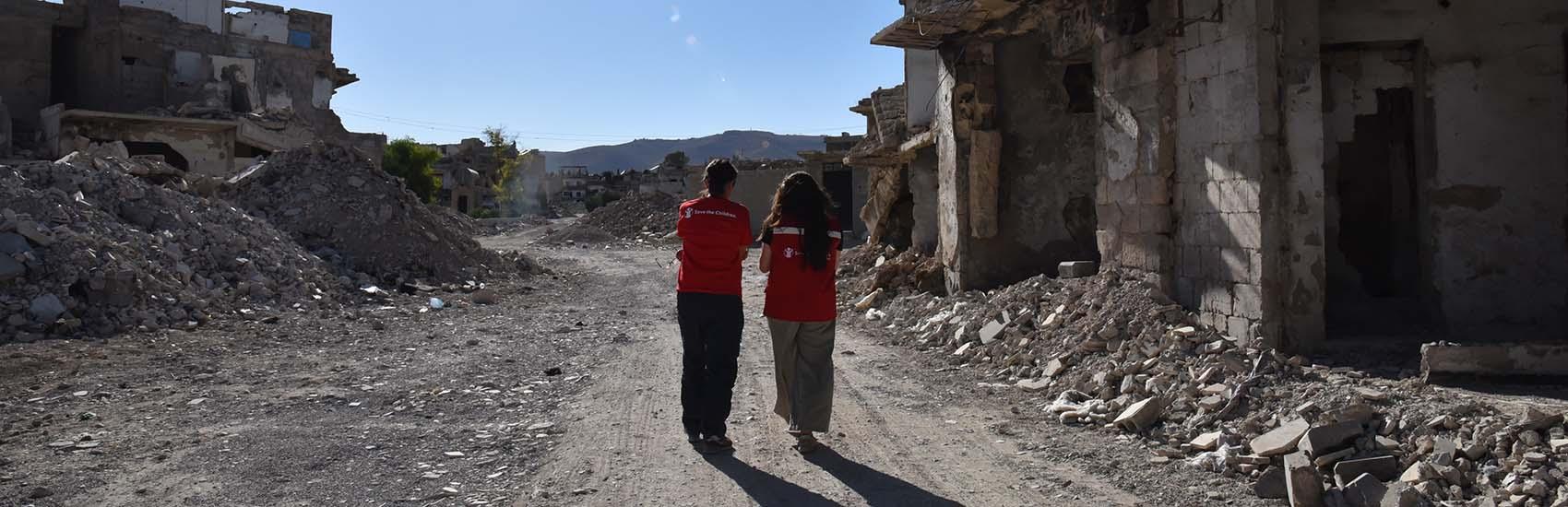
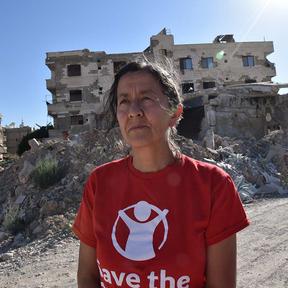
This summer, I traveled to Syria —visiting Save the Children’s programs in Damascus, Aleppo and Idlib. After fourteen years of brutal conflict, the country remains deeply scarred. The scale of destruction is staggering, and the humanitarian needs are immense. Yet, amid the rubble, I witnessed something powerful: hope, resilience, cooperation, and a quiet determination to rebuild.
These moments reminded me that while humanitarian aid remains essential, it must evolve. We need to move beyond temporary fixes toward long-term, locally-led solutions where communities have the power to shape their own futures.
How to Return to a Shattered Home?
In Syria, the devastation is visible in every corner. An estimated 40% of schools —about 7,500 buildings— and countless hospitals are either damaged or completely destroyed. Entire communities lack access to basic services, leaving 2.5 million children out of school and another 1.8 million at risk of losing their education.
The absence of functional learning centers and healthcare facilities is the main barrier preventing displaced families from returning home. Even those desperate to leave displacement camps are wary of going back to places where their children have little prospects of receiving an education or medical care.
At Al Madina Hospital and Save the Children’s nutrition center, I saw firsthand the consequences of massive funding cuts by the U.S. and other donors to lifesaving humanitarian assistance, and critical global health, development, and peacebuilding efforts. Malnutrition cases are on the rise and numerous healthcare facilities are closing, forcing people to travel long distances for medical help.
The impact of aid cuts is especially severe in the most fragile contexts, like Al Hol refugee camp, which relied on US-Government funding for 70% of its operations.
As I reflect on my trip to Syria, I’m reminded of a broader truth: traditional foreign assistance is no longer enough.
The Syrian Rebuild
Despite these challenges, I was inspired by the visible efforts at recovery and reconstruction. Just months after a government transition, Save the Children is working closely with Syrian authorities and communities to influence policy, advocate for children’s rights and rebuilding of the country . I’m confident that we’re uniquely well positioned to support Syrian children today and for years to come, particularly in advancing access to education and healthcare.
We know that sustainable progress can only be made in partnership with others. Donors and partners are engaging with authorities on repairing schools and re-enrolling out-of-school children. I also observed a growing number of opportunities for meaningful engagement across government actors.
Yet operational challenges persist—especially in northeastern Syria—jeopardizing the effectiveness of both lifesaving assistance and rebuilding efforts alike. Security constraints, administrative barriers, and fragmented control of power make program delivery complex. Humanitarian organizations struggle to maintain regular access, coordinate assistance, and ensure safety, both of staff and participants. The lack of coordinated data collection across organizations and reporting systems further hampers effective needs assessments and response planning.
The Best Support is Targeted
Syria needs rebuilding at all levels, but no single organization can do it all. We must prioritize where we can deliver the greatest impact and rely on local partners and peer organizations to do the same. Otherwise, we risk spreading ourselves too thin.
At Save the Children, we’re focusing on delivering the biggest impact for children over the coming years, especially those in displacement camps. To make strategic choices and avoid overlapping efforts with other organizations, we ask: What are we best at? What aligns with our mission? What can be sustainably funded?
Targeting individual efforts is essential, but so is multilateral collaboration. Establishing transparent, joint systems for data collection can help us reach children and families with the greatest needs. Deepening relationships with local partners allows us to deliver lasting change through agile, flexible programming.
Toward a New Humanitarian Model
As I reflect on my trip to Syria, I’m reminded of a broader truth: traditional foreign assistance is no longer enough. In a recent article for Stanford Innovation Review, I argue that it’s time to retire the term altogether—and with it, the outdated paradigms that underpin much of our current aid architecture.
The humanitarian sector must shift from delivering aid to supporting systems where local actors have more power to drive progress according to their priorities—transferring decision-making and resources, investing in developing local economies, to name a few. That means moving from short-term relief to long-term partnerships that support communities in driving their own development.
The tremendous resilience I saw in Syria—and beyond— are not just signs of hope. They are a call to action: to reimagine how we work, who leads, and what lasting impact truly looks like.