
1919-1920s
Every child deserves a future
1919
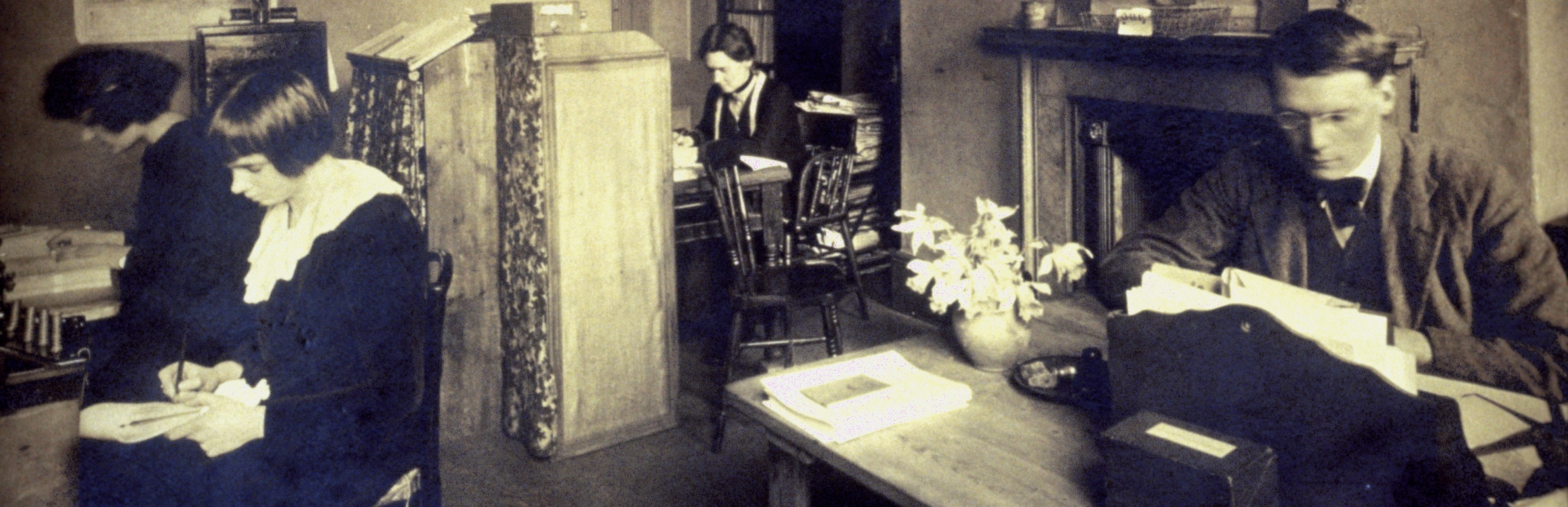
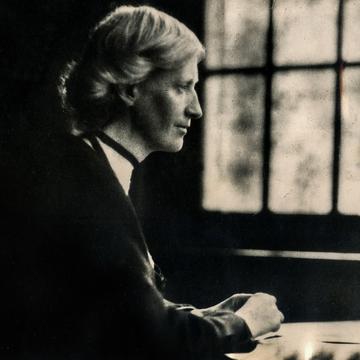
• Our story begins in 1919, when Eglantyne Jebb launches the Save the Children Fund in London, in the wake of World War I. It soon becomes the first global movement for children. We started child sponsorship the same year.
1924
• An outspoken champion for children, Jebb drafts the historic Declaration of the Rights of the Child, adopted by the League of Nations in 1924.
1930s
In the U.S. and around the world
1932
• In the wake of the Great Depression, a group of forward-thinking Americans inspired by Jebb’s vision establishes Save the Children in the U.S.
1933
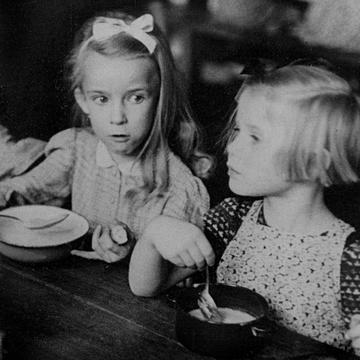
• We help America’s struggling families during the Great Depression support themselves with home gardening programs. We provide children with clothes, shoes, books and toys. And in schools, we serve hot lunches and build playgrounds.
• In Europe, we ensure children displaced by World War II receive much needed aid, including food, medicine, clothes and blankets.
1940s
Every day and in times of crisis
1940
• In response to the plight of children caught in the crossfire of World War II, Americans flock to support British war orphans through child sponsorship.
1942
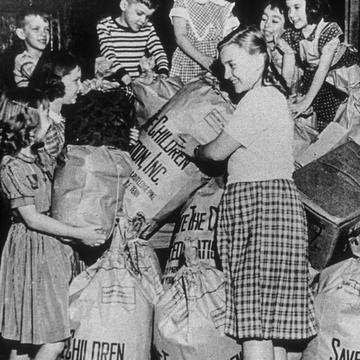
• We provide more than 250,000 Appalachian children with clothing and shoes, plus 800,000 schoolbooks.
1950s
Whatever it takes
1950
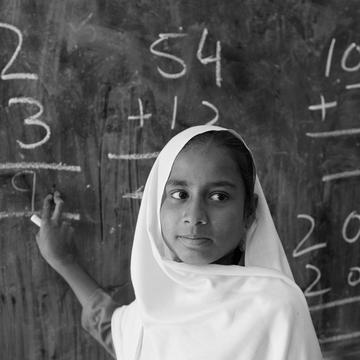
• Our work expands to include education and farming programs in France, Holland, Italy, West Germany, Austria, Finland, Greece, Lebanon and South Korea.
1951
• We ensure war-affected children in Korea receive food, clothing and school supplies, and launch a sponsorship program.
1954
• Sponsorship programs are launched for children in ravaged post-war Europe, providing them with shelter, food, health care and schooling.
• Sponsorships for U.S. children are expanded to include scholarships for Native American children.
1959
• Save the Children expands to Asia and the Middle East with education and farming programs.
1960s
An expanding global movement
1963
• Save the Children opens its first Latin American field office in Colombia, with a focus on community-development programs.
1966
• Save the Children expands to Vietnam with a community-development program.
1968
• The Appalachian Fireside Craft Project (AFC) launches. Later, crafts from programs worldwide are marketed in our catalogs and online.
1969
• Save the Children opens its first African field office in Tanzania.
1970s
Putting pioneering programs to work
1972
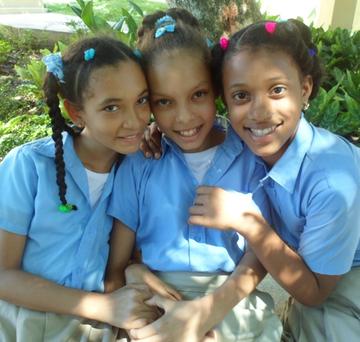
• High-impact sponsorship begins in Dominican Republic, combining child-focused community development programs.
1975
• Save the Children scales up our pioneering programs. Our Community-based Integrated Rural Development (C-BIRD) model becomes the standard for overseas development.
1977
• Save the Children expands to Upper Volta (modern-day Burkina Faso) starting the region's first community development program.
1979
• Save the Children expands to El Salvador with a community development program.
1980s
The leading expert on children
1980
• Independent of government or religious affiliation, Save the Children is the first international aid agency allowed to return to Vietnam after the fall of Saigon.
• Save the Children is at the forefront of the global campaign to reduce maternal and child mortality with comprehensive child-survival projects during the 1980s.
1982
• Save the Children Federation marks the agency's 50th anniversary as programs open in the Philippines, Republic of Kiribati and Bhutan.
1984
• Food crises in Ethiopia, Somalia, Southeast Asia and Sudan draw worldwide attention and urgent response from Save the Children.
1989
• The Convention on the Rights of the Child, based on Eglantyne Jebb's vision for children, becomes the most universally accepted human rights treaty in history, and is adopted by United Nations General Assembly.
1990s
DOING WHATEVER IT TAKES, FOR AS LONG AS IT TAKES
1994
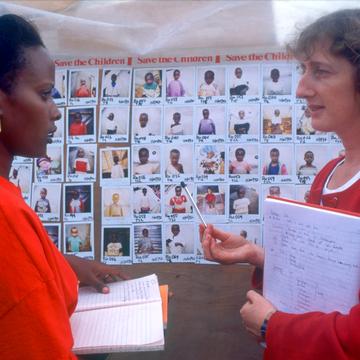
• Children in Rwanda are reunited with their parents in a Save the Children program to help families separated during the genocide.
1997
• U.S. children’s programs expand to provide children with caring adults and safe places for constructive play before and after school.
2000s
Pioneering child-centered solutions that work
2000
• The State of the World's Mothers report offers the agency's first annual ranking of mothers' and children's well-being in more than 100 countries.
• People affected by HIV/AIDS in sub-Saharan Africa receive new educational and medical assistance.
• The Bill & Melinda Gates Foundation funds the Saving Newborn Lives initiative to help reduce newborn deaths in developing countries.
2002
• The America's Forgotten Children report spotlights 2.5 million children living in rural poverty in the United States.
2003
• Kim Phuc, who survived napalm burns as a child during the Vietnam War, and actor Sally Field attend a Capitol Hill news conference supporting funding and passage of the Women and Children in Conflict Protection Act.
• The war in Iraq intensifies: Save the Children delivers food, water, fuel and medical supplies to thousands of affected children and families.
• Mothers in India, Mali and Pakistan who are immunized against potentially fatal tetanus infections now total more than 14 million.
2004
• Save the Children establishes literacy and nutrition programs in poor, rural, American community schools.
• Save the Children sends aid to Sudan's Darfur region, where civil conflict displaces more than 300,000 children and families.
• The Asian tsunami kills more than 200,000 people. Save the Children registers 7,000 children separated from their families and sets up schools and trauma care centers.
2005
• Actor George Clooney and CEO Charles MacCormack attend the G-8 Summit in Scotland, to promote the ONE global campaign against poverty and HIV/AIDS. In Ethiopia actor Brad Pitt tours a Save the Children program for the ONE campaign.
• Save the Children’s response to Pakistan's earthquake includes emergency health clinics, schools and shelters.
• Hurricane Katrina strikes the U.S. Gulf Coast, displacing hundreds of thousands of children. Save the Children sets up schools, camps and child care and counseling centers.
2006
• The Caps to the Capitol program enlists volunteers to knit or crochet more than 130,000 caps to keep newborns warm and alive in the developing world, and to write President Bush in support of child survival programs.
• Microfinance loans have now gone to help nearly half a million mothers support their families in 17 countries.
• Save the Children launches the Rewrite the Future campaign to help provide education to some of the more than 40 million children affected by armed conflict worldwide.
2007
• Save the Children observes 75 years of service to children as former sponsored-child Dominique Jones rings the January 8th closing bell at the New York Stock Exchange.
2008
• In May 2008 Cyclone Nargis devastated Myanmar's Irrawaddy Delta. Save the Children reached more than 600,000 affected people including at least 300,000 children, with live-saving aid.
2009
• May 19, 2009 marks the 90th birthday of the Save the Children movement.
2010s
Delivering child health, education and protection
2010s
• Save the Children organizations around the world join together to become one global movement, transforming children’s lives and the future we share.
• Save the Children provided 1.6 million Haitians – including 700,000 children – with shelter materials, food and water, health care, hygiene and sanitation, after the magnitude 7.0 earthquake hit Haiti.
• Severe monsoon flooding wreaked havoc in Pakistan, forcing an estimated 21 million people to flee their homes. Save the Children helped more than 2.6 million flood-affected people with emergency medical care, as well as food, shelter materials and other basic necessities.
• Save the Children delivered community-based health care to more than 6.6 million newborns and 7.3 million children under age 5.
• In Bangladesh, Save the Children's HIV messages reached 36 million children and youth through a national media campaign.
2011
• When a devastating drought struck the Horn of Africa, Save the Children helped 942,000 children by providing child-friendly spaces, education and counseling services, reuniting children with their families and providing foster families when needed.
• Save the Children provided relief, care and protection for nearly 7.6 million children caught up in natural disasters, including the Japan earthquake and tsunami, tornadoes in Alabama and Missouri, and drought in the Horn of Africa.
• Save the Children's education programs helped more than 15 million children improve their skills and engage in learning in 26 countries.
• Save the Children's health programs reached 16 million children, many through frontline health workers we trained, who played a critical role in treating life-threatening diseases such as pneumonia, malaria and diarrhea.
2012
• In September 2012, Save the Children launched the Every Beat Matters campaign, giving Americans new ways to help millions more children survive.
• Hurricane Sandy devastated the east coast in October. Save the Children mobilized our staff and resources for children, providing protection through our child-friendly spaces in emergency shelters.
• The Syria civil war killed thousands of children, and many more were injured traumatized or forced to flee their homes. Save the Children workers were on the ground, in very dangerous conditions, helping keep children safe, providing the basics they needed and offering assistance to help them cope with trauma.
2013
• 77% of our early education programs around the world met young children's cognitive, linguistic, physical and psychosocial needs.
• We reached 38,000 American children with early education and 150,000 children with literacy programs.
2014
• Always at the forefront when children’s lives are at stake, we put our courage and care to the test in the fight against Ebola. In Liberia, Guinea and Sierra Leone, we reached 897,000 people with lifesaving care, awareness raising and hygiene kits.
• Save the Children reached more than 11.9 million children with HIV/AIDS prevention and treatment.
• Our education programs helped 11.8 million children have a brighter future.
• We helped 4 million family members increase their incomes and build more sustainable livelihoods.
• We worked in 15 countries to reunite children separated from family members during humanitarian crises, like that in Syria.
• We helped secure a national health bill in Nigeria that could save the lives of over 3 million mothers and children in five years.
• We worked with 194 countries to adopt the Every Newborn Action Plan setting targets to end preventable newborn deaths.
• We directly reached 10.8 million people – including 5.9 million children through our humanitarian response work.
• Save the Children worked in 120 countries, including the United States, and helped more than 166 million children – including more than 55 million children directly.
2015
• Save the Children worked in 120 countries, including the United States, and helped more than 185 million children — including more than 62 million children directly.
• We launched Literacy Boost in 8 more countries for a total of 32 countries.
• U.S. children who participated in both our early childhood and school-age literacy programs made twice the annual reading progress as their classmates.
• Save the Children supported quality education for children in need around the world, directly reaching 12.2 million children.
• After Nepal’s devastating earthquakes, we directly reached more than 500,000 children and adults with lifesaving relief and long-term recovery support.
• 22.6 million children received high-impact health care and Save the Children directly reached another 11.1 million through our nutrition programs.
•Our new Emergency Health Unit currently supports three, six-person primary health teams, each capable of managing 27,000 primary health-care cases every 3 months.
• Our work led to 6.8 million lifesaving health interventions, including for malaria, pneumonia, diarrhea and malnutrition.
• We responded to 99 humanitarian crises in 59 countries, addressing the unique needs of vulnerable children around the world.
• Save the Children directly helped 13.8 million people, including 7.1 million children through our humanitarian response work.
• As campaigning for the U.S. presidential election kicked off, we rallied voter support for children’s priorities and asked candidates to commit to investing in kids, if elected.
• We were joined by 177 advocates, including 50 youth advocates, who raised their voices for kids in 110 meetings with Congressional officials during our 2015 Advocacy Summit.
2016
• Save the Children reached more than 157 million children, including more than 56 million children directly.
• We worked in over 120 countries, including the United States, where we helped 683,000 children.
• We helped give 36.2 million children around the world a healthy start in life. We continue to be at the forefront of global efforts to end preventable child deaths by focusing on maternal, newborn and child health and nutrition, alleviating hunger and preventing and treating HIV and AIDS.
• Save the Children helped give 13.8 million children around the world the opportunity to learn. Here in the United States, we reached more than 124,000 children in 16 states through our early education and literacy programs – and we distributed nearly 400,000 books.
• Save the Children launched the No Lost Generation program in Turkey to provide quality learning opportunities for Syria’s refugee children, as well as children in Turkey’s host communities.
• In the U.S., our Early Steps to School Success home-visiting program puts at-risk babies and toddlers on track to begin school prepared. We’re also providing quality preschool programming through Head Start and Early Head Start in four states. We also began implementing our school-readiness summer camp, KinderBoost, in three states.
• Save the Children helped protect 3.8 million children from harm. Since 2007, we’ve reached more than 85,000 children and adults through our Journey of Hope program in 17 U.S. states, as well as five other countries, helping children, parents and caregivers cope with trauma and strengthen their resilience.
• Save the Children launched our Every Last Child global campaign, aimed at reaching the most vulnerable children, those left behind by the world’s progress. The campaign tackles the key causes of exclusion and sets the world on the trajectory to end preventable child deaths and achieve learning for every child within a generation.
2020s
Change for children
2020
• 2020 was one of the worst years, over the past couple of decades, for the world’s children. The COVID-19 pandemic brought unprecedented upheaval – magnifying the hardships of millions of children around the world who were already struggling. The pandemic also deepened systematic inequalities within societies and made our work for vulnerable children more urgently needed than ever.
• Through Save the Children’s work – every second of every day – a hungry child is fed, a sick child gets care, a young mind is learning, a vulnerable child is protected, or a family gains tools to overcome poverty.
• As the pandemic spread throughout the world, we worked to ensure children’s routine health care was not disrupted. We trained and equipped health workers to deal with new challenges. We also found innovative ways to provide families with knowledge and resources to keep safe from COVID and slow its spread.
2021
• Erich Karl, the last witness of Save the Children's first relief mission and "hero" of our book I Am Alive, passed away in June at the blessed age of 107.
2023
•To celebrate Eglantyne Jebb on International Women’s Day, we commissioned artist Sam Rodriguez to create a bold new portrait of our unapologetic founder. A portrait that showed her fierce determination. Our hope is that one day her name will be a household name – alongside legends Rosa Parks, Amelia Earhart and Frida Kahlo. Eglantyne Jebb: one of the most influential women you’ve never heard of.
2025
• As the world changes, so do the needs of children. Our pioneering spirit inspires us to continuously innovate and adapt to keep pace with the dynamic environment around us and support kids when and where they need us most.
• After a multi-year global review and consultation, we made the decision to discontinue Save the Children's century-long Child Sponsorship Program—transitioning to a more flexible, impactful and cost-effective recurring giving offering that better supports the collective needs of children and communities facing the most pressing challenges.
• One of the most effective ways to support our work for kids and families is becoming a monthly donor with Save the Children. Your ongoing commitment helps ensure we’re consistently among the first to respond and the last to leave when crisis strikes—directing more money toward programs by decreasing administrative costs and providing greater flexibility for funding to reach children most in need.