
Help Children and Refugees in Haiti
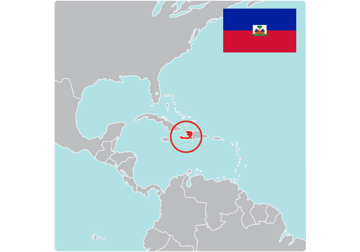
Chronic instability, brutal dictatorships and natural disasters in recent decades have left Haiti, officially the Republic of Haiti, the poorest nation in the Americas. Nearly 60% of the population lives below the poverty line.
In recent months, Haiti has descended into a critical state of violence and chaos. More than one million children are trapped in areas controlled by armed groups. Our teams are working around the clock to support children and ensure they are protected from harm, exploitation and abuse.
In 2010, Haiti suffered a devastating 7.3 magnitude earthquake – a catastrophe that took hundreds of thousands of lives and destroyed much of its capital city, Port-au-Prince, and neighboring areas. Then in 2016, Hurricane Matthew, the fiercest Caribbean storm in nearly a decade, left 1.4 million Haitians in need of humanitarian assistance.
Widespread poverty, a lack of job opportunities and inadequate access to safe water, healthcare and hygiene facilities meant Haiti was already facing a chronic hunger and malnutrition crisis. But amid spiralling lawlessness and climate disasters, the country is now grappling with record high hunger levels.
Save the Children has been on the ground in Haiti all along – and we’ll continue to be there for Haiti’s most vulnerable children and families – thanks to supporters like you.
Save the Children is a charity you can trust. Read more about our nonprofit ratings and how we use your donation so you can give with confidence that you're helping children in times of crisis.
Armed Groups in Haiti: What to Know About the Escalating Violence
Haiti has descended into a critical state of violence and chaos. Armed groups have gained near-total control of the country’s capital, Port-au-Prince, and are increasingly expanding in the countryside. The growing insecurity has triggered a widespread displacement crisis.
Children living in areas impacted by this violence are also at risk of armed recruitment and sexual violence. Critical health and social services are teetering on the edge of collapse. Most health facilities are inaccessible due to the violence, leaving thousands of families and children without healthcare services.
Over five million people – 56% of the population – are exposed to the violence. The regions of Port-au-Prince and Artibonite have been worst impacted. During the first six months of 2024, an average of five children a week have been killed or injured in armed violence, according to verified data. However, the true number of child casualties is likely to be much higher.
Cases of kidnappings and sexual violence are also widespread and rising at alarming rates. In the first six months of 2024, close to 4,000 cases of gender-based violence were reported – 94% by women and children. The true figure is likely to be much higher. Attacks to schools and hospitals also continue.
Save the Children has a long history of responding to conflicts and natural disasters in Haiti. Today, amid challenging conditions, Save the Children is working around the clock to support children who are trapped in a deadly cycle of violence, poverty and hunger.
We are providing cash so families can buy food and other essentials, and delivering health and nutrition support, including treating children for malnutrition and providing nutrition counselling to caregivers. We are also supporting children to access water, sanitation and hygiene facilities, to continue learning and ensuring they are protected from harm, exploitation and abuse.
Challenges for Children in Haiti
Suffering from extreme poverty, as well as child mortality, forced labor and deadly violence in the double digits, all in the aftermath of devastating natural disasters, children in Haiti need your help.

1 child in 15 dies before their 5th birthday, 9 times the U.S. rate

22% of children suffer from stunting due to malnutrition

36% of children are engaged in child labor, instead of learning

7% of girls (ages 15-19) are married, and 1 in 19 gives birth

15 in every 100,000 children is murdered

59% of people live in poverty
Our Results for Children in Haiti
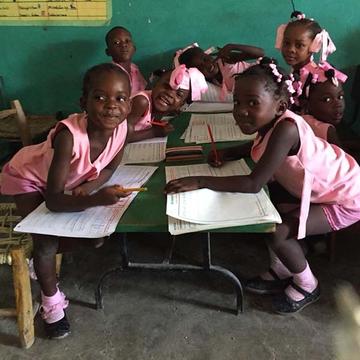
Your support helps give vulnerable children in Haiti the opportunity for essential early learning – setting them up for success in school and later in life.

71,000 children healthy and nourished

20,000 children educated and empowered

200 children protected from harm

600 children lifted from poverty

3,000 children aided in crisis
Our Work for Children in Haiti
Save the Children has been a leading charity for children in Haiti since 1978, providing a healthy start in life, the opportunity to learn and protection from harm.
Our programs address the health and nutrition needs of mothers and children. We ensure children’s early childhood development and literacy. We reach children through school-based health and nutrition activities that enable them to stay healthy, well-nourished and attending school. We also address water, sanitation and hygiene needs. And we protect vulnerable children from harm.
When crisis strikes in Haiti, Save the Children is on the ground with the infrastructure, knowledge of the country, staff and global expertise to respond quickly and efficiently to meet the needs of the most vulnerable children and their families.
Here are some recent examples of our work:
A healthy start in life
- We’re training health care providers to safely assist mothers on the day of birth and beyond, including helping babies breathe, essential baby care and postnatal care for babies and mothers, as well as Kangaroo Mother Care for premature babies
The opportunity to learn
- We’ve trained hundreds of caregivers on at-home early learning strategies
- Our education programs are helping prepare little ones for schooling, restore schools, provide classroom materials, train teachers and support parent teacher associations
- We’re working with education systems to deliver basic health services and foster lifelong healthy hygiene habits
- We’re providing nutrition education and training teachers on nutrition education strategies
- We’re helping adolescents make successful transitions to adulthood, including strategies for economic opportunities and activities to foster better adult-youth communication
Protection from harm
- We’re identifying at-risk children and referring them for support, and we’re offering community-based activities to help prevent violence toward children
- We’re fighting for the rights of Haitian children, promoting positive discipline instead of corporal punishment at home and in schools – plus educating children on the defense and promotion of their rights
Emergency response
- We are right now working around the clock to support children who are trapped in a deadly cycle of violence, poverty and hunger, as armed groups rages in Haiti. Since early March 2024, the situation in Haiti has worsened for children, with many families forced from their homes and those trapped in the Port-au-Prince area struggling to cope as food supplies dwindle in the country.
- In response to the 7.2 magnitude earthquake that struck western Haiti on August 14, 2021, amid challenging conditions, Save the Children responded quickly to help children and families who have lost everything.
- After the 2010 earthquake and Hurricane Matthew in 2016, we were quick on the scene to save lives, provide families with urgently needed supplies, food and shelter materials
- We also helped to protect children from harm, restore their access to education and provide families with income opportunities
- We ran disaster risk reduction programs to help children and schools be better prepared for the impact of a disaster
How to Help Children in Haiti
Donate
Support Save the Children’s mission. Donate to help children in Haiti and around the world grow up healthy, educated and safe.

Join Team Tomorrow
Join Team Tomorrow and your monthly donation will go toward addressing the needs of children affected by today’s most urgent issues.
Browse the Gift Guide
Give a meaningful gift that will help transform children’s lives and futures in Haiti and beyond. There’s something for everyone!
Sources: Facts and statistics have been sourced from Save the Children’s monitoring and evaluation experts, as well as our thought leadership publications, including our Global Childhood Report 2020 and A Catalog of Common Approaches 2020. Other sources include: CIA World Factbook and UNICEF.
Photos: Save the Children.