Latin America/Caribbean
| Click on a country to learn more |
Program Highlights
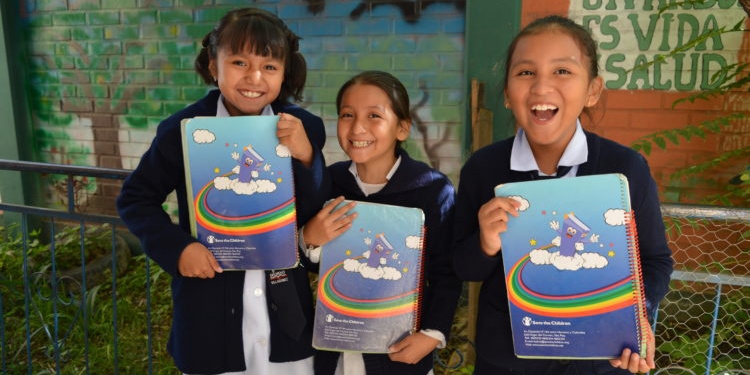
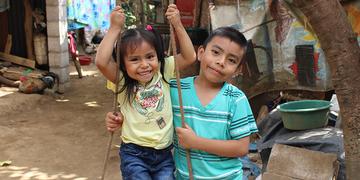
There are 35 countries in Latin America and the Caribbean, and 54 million children under the age of five. According to UNICEF, 60 percent of the region's children are living in poverty. Save the Children is working in those countries identified by the United Nations as having the highest levels of rural poverty in the region: Bolivia, El Salvador, Guatemala, Haiti, and Nicaragua. In addition, the agency works directly with three Save the Children Alliance members in Honduras, Mexico, and the Dominican Republic. With a focus on women and children, and with a community-based approach, Save the Children is forging partnerships and implementing programs to make lasting improvements in the health and well-being of newborns, children under five years old, school-aged kids, adolescents and mothers. In line with the global initiatives of Save the Children, the priorities of the Latin American and Caribbean region include: 1) neonatal health and reproductive health; 2) early childhood development and primary education; 3) food security and nutrition; and 4) emergency response and preparedness.
Once a part of the ancient Incan Empire, Bolivia still bears the legacy of its history. When the Spanish conquered the Incas in the 16th century, Bolivia’s Indian population was reduced to slavery, setting the stage for the vast economic inequality that still continues today — indigenous groups that make up 85 percent of the population live in poverty. The western highlands of this landlocked country include the Altiplano, a great plateau where almost half the population lives. Long one of the least-developed Latin American countries, Bolivia’s economic position has improved in recent years as a result of increasing mineral prices and the development of natural gas resources. However, it was ranked 117th out of 177 countries in the world in the 2007/08 Human Development Index and there is still a great economic divide between indigenous and non-indigenous populations. Read More
El Salvador is the smallest, most densely populated country in Central America, with a population of just under 7 million. Lying along the Pacific Ocean’s earthquake- and volcano-prone “Ring of Fire” and at latitudes plagued by tropical storms and hurricanes, El Salvador has faced more than its share of natural disasters. These have included the deadly combination of 2005’s Hurricane Stan and the eruption of the Ilamatepec volcano, which left thousands of children and adults in shelters and in need of relief. Read More
Bordering El Salvador, Mexico, Honduras and Belize and between the Gulf of Honduras and the Pacific Ocean, Guatemala’s varied landscape ranges from the sprawling metropolis of Guatemala City to volcanoes, tropical valleys and pine-draped hillsides of the western highlands. Of the country’s 12.3 million people, more than half are indigenous Mayans. A 36-year guerrilla war that displaced some one million children and adults ended in 1996. Read More
Living amid persistent political and social turmoil, Haitian children and their families face tremendous hardships as their country struggles with many of the worst development indicators in the world. In this difficult environment, Save the Children promotes the protection of children’s rights, improves the quality of primary schooling, provides quality medical counseling and services in remote communities, helps improve child and maternal health and nutrition practices and supports agricultural initiatives and household economic security for marginalized families. Read More
In Honduras, Save the Children has been working to create positive changes in the lives of girls and boys in rural communities and poor neighborhoods of the capital Tegucigalpa since 1968. Save the Children has five offices distributed in the central and southern areas of Honduras. Read More
Bordered by Costa Rica to the south, Honduras to the north, the Pacific Ocean to the west, and the Caribbean Sea to the east, Nicaragua is a land of lakes and mountains, rivers and volcanoes, rainforests and oceans. The country is divided into three geographic regions: the Pacific Lowlands, the mountainous Central Region and the Atlantic Lowlands. Nicaragua is extremely susceptible to hurricanes and other natural disasters, including destructive earthquakes and landslides. It has one of the highest degrees of income inequality in the world and the third lowest per capita income in the western hemisphere. Read More