
URGENT: ANOTHER MASSIVE EARTHQUAKE HITS AFGHANISTAN
A 6.3 magnitude earthquake—the second to hit Afghanistan in two months—struck Samangan province, forcing children and families to flee their homes in terror.
Save the Children is deploying an emergency health team to the affected area to provide urgent medical care and support for impacted children and families. Your donation to the Children's Emergency Fund supports our work to deliver emergency aid to children around the world.
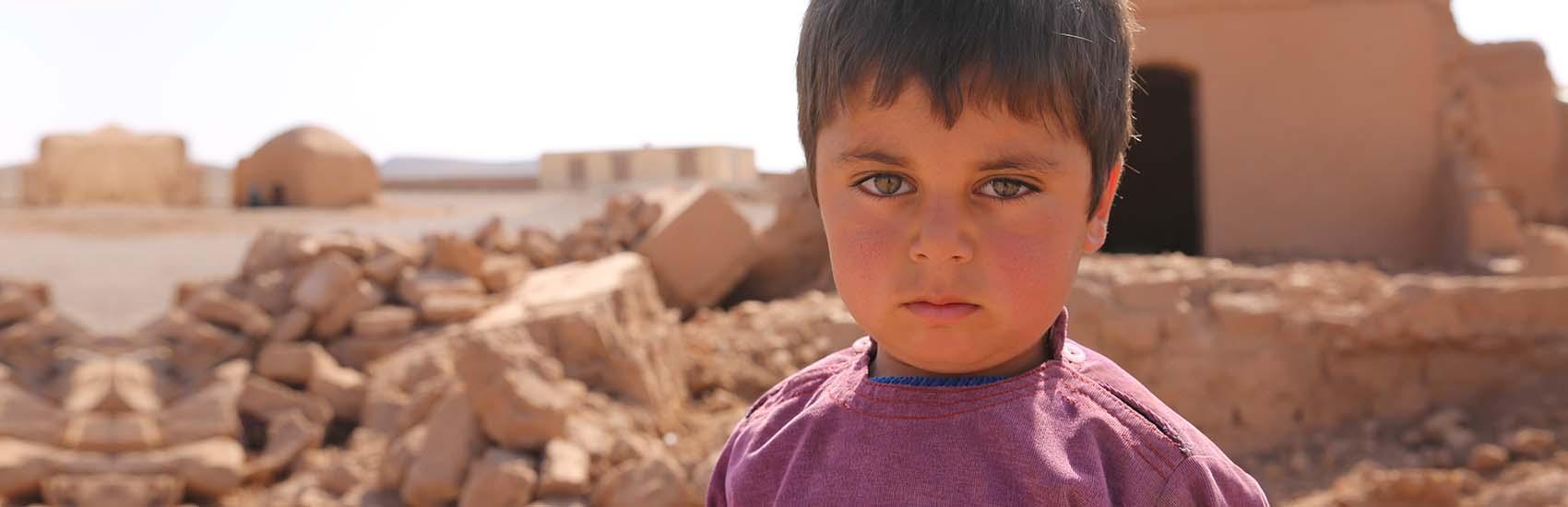
Help Children & Refugees in Afghanistan
- Devastating earthquakes have damaged more than 8,000 homes, with thousands of families now facing a freezing winter in tents.
- More than 800,000 children have crossed into Afghanistan from Iran and Pakistan in 2025; Children are strangers in their own homeland.
- Save the Children has been supporting communities and protecting children's rights across Afghanistan since 1976.
Samangan Earthquake Forces Children to Flee Homes
Another massive earthquake in Afghanistan - the second in two months - forced children to flee their homes in the middle of the night and caused at least 20 deaths and hundreds of injuries.
The 6.3 magnitude earthquake struck in the early hours of Monday, with the epicenter in Samangan province, an hour from the northern city of Mazar-e-Sharif. Severe shaking was also felt in the capital, Kabul, with tremors reported as far away as Pakistan.
Save the Children is sending a mobile health team to Samangan as part of an initial response.
Cold weather heightens health risks, especially for young children. It weakens immune systems and increases susceptibility to acute respiratory infections including pneumonia.
The earthquakes in Kunar and Nangarhar also destroyed livelihoods, with most people in the remote, rural villages dependent on livestock and agriculture for income. Nearly every family assessed lost all their food when the quakes reduced homes to rubble.
Save the Children has been working in Afghanistan since 1976, but the scale and severity of the current crisis is like nothing we have ever seen before. Families and refugees are increasingly taking desperate measures to survive.
Children’s access to healthcare, protection and education has been drastically diminished. Without access to education, children are being deprived of their fundamental rights. This is yet another devastating blow for children in Afghanistan who are facing an unprecedented hunger crisis.
Since March, Save the Children in Afghanistan has supported more than 150,000 child who have returned to Afghanistan, including the following:

Treated 7,465 people, including 3,867 boys and 3,598 girls under 5 years of age for pneumonia

Treated 978 children with acute malnutrition

Treated 10,167 children for malaria and diarrhoea, and 867 children received measles vaccinations
Treated 452,486 children treated with nutrition services

An icon of a mother and child holding hands.

Treated 564,671 children with health services

Provided pre-natenatal care to 2,888 pregnant women
How many people have been affected by the Afghanistan earthquake?
According to initial UN reports, about 12,000 people – around half of whom are children – have been directly affected by the 6.0 magnitude earthquake in eastern Afghanistan. Kunar province is among the most severely damaged areas.
What is the death toll and number of injured?
De facto authorities report that more than 1,400 people have lost their lives and another 3,000 have been injured, though these numbers are expected to rise as rescue teams reach more remote areas.
Why is it so difficult to reach the affected villages?
Many villages are mountainous and remote, now cut off by massive rock falls caused by the earthquake. One Save the Children medical team walked over 12 miles on foot, carrying medical equipment with the help of community members, to reach children and families in need.
What challenges are children and families facing right now?
Families are sleeping outside without shelter due to constant aftershocks and damaged buildings. Clean water sources have been disrupted, forcing families to use unsafe river water. Food, clothing, and cooking supplies were destroyed when homes collapsed. Children face severe risks of malnutrition, illness, and trauma without urgent support.
How is Save the Children responding to the crisis?
Save the Children’s mobile medical teams are working around the clock in Kunar province to treat injuries, provide clean water, and deliver emergency supplies. The organization is also setting up a childcare center to provide mental health support for children.
What is most urgently needed to help children and families impacted by the earthquakes right now?
There is an immediate need for clean water, food, shelter, and medical care for children and families. Every hour counts to save lives, especially in hard-to-reach villages where ambulances cannot reach.
What has Save the Children’s role been in Afghanistan historically?
Save the Children has been working in Afghanistan since 1976, including through times of conflict and natural disaster. Today, we deliver health, nutrition, education, child protection, shelter, water, sanitation, hygiene, and livelihoods programs in 10 provinces, while working with partners in an additional 11.
How can I help children affected by the Afghanistan earthquake?
You can support Save the Children’s emergency response by donating today. Your gift helps provide urgent medical care, clean water, food, shelter, and protection to children and families in desperate need.
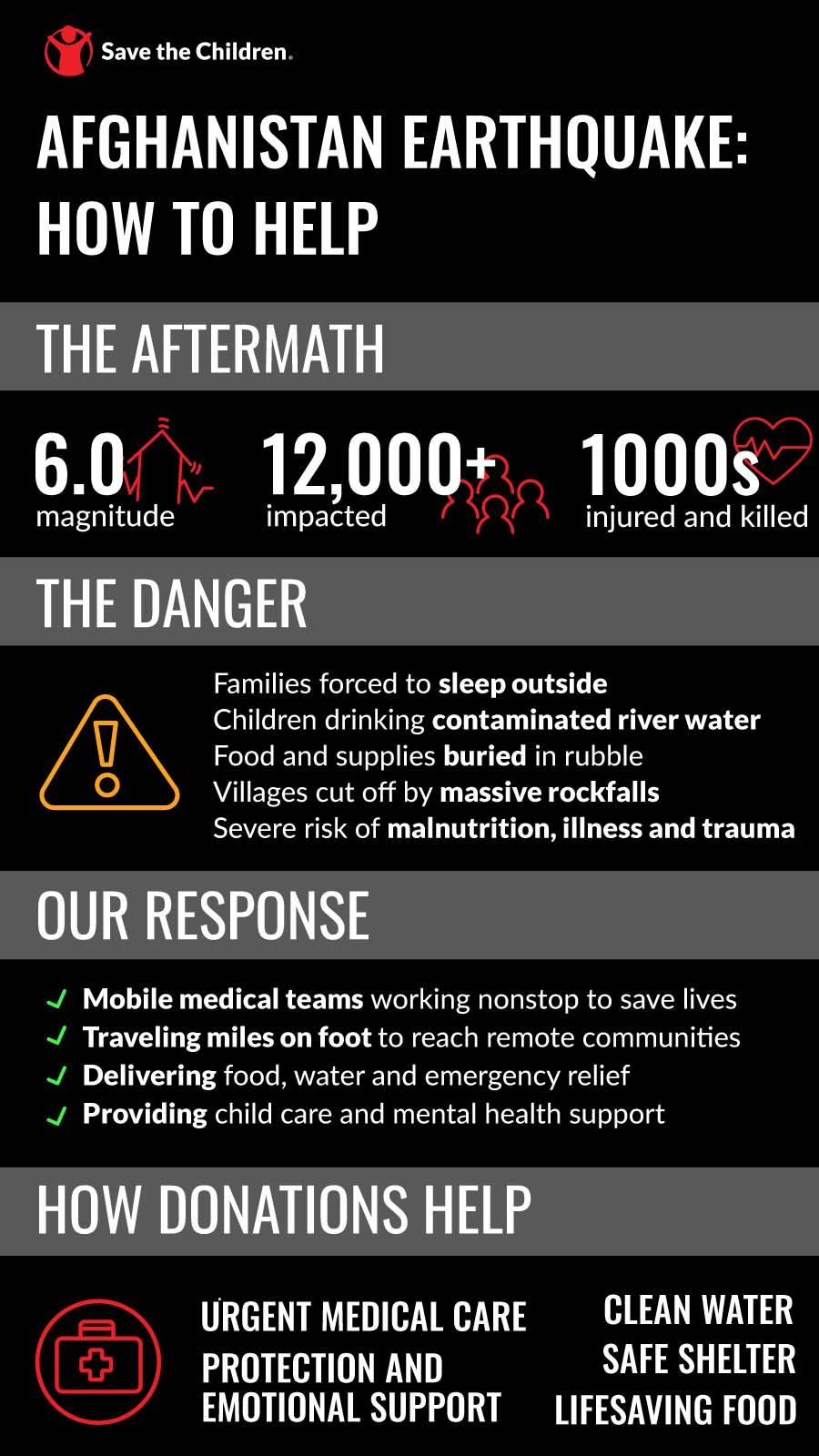
An infographic explaining the impact of the Afghanistan earthquake and how to help.