
EMERGENCY ALERT
South Sudan is facing one of the world's most severe humanitarian crises. Plagued by continuing violence, repeated climate disasters, widespread hunger, mass displacement and now soaring prices. About 1,000 people a day are fleeing into South Sudan, arriving in scorching heat and with children in dire need of support.
Your donation to the Children's Emergency Fund helps our teams respond quickly to children living in crisis in South Sudan and around the world.
Help Children in South Sudan
South Sudan gained independence from Sudan in 2011, according to the peace deal ending Africa's longest-running civil war. Independence, however, has not brought conflict and its consequences to an end.
Today, South Sudan continues to face multiple humanitarian challenges, including ongoing conflict and displacement, food insecurity and malnutrition, poor access to basic services including health care, education and protection, as well as natural disasters and disease.
Save the Children has worked in South Sudan since 1991. Our teams provides children with access to education, healthcare and nutritional support, and families with food security and livelihoods assistance. In 2023, our programs reached over 1.9 million people including 1.1 million children. Your support makes this life-saving work possible.
Challenges for Children in South Sudan
On the brink of famine and facing conflict and its consequences, children in South Sudan need your help. Far too many are malnourished, out of school, displaced and at risk of abduction and recruitment into armed forces, where they may be subject to violence, forced labor and sexual exploitation.
-
 1 child in 10 dies before their 5th birthday,14 times the U.S. rate
-
 31% of children suffer from stunting due to malnutrition
-
 62% of children are out of school, and 71% of girls (ages 15+) struggle to read and write
-
 25% of girls (ages 15-19) are married, and 1 in 16 gives birth
-
 37% of children have been displaced by conflict
-
 66% of people live in poverty

Our Results for Children in South Sudan
Despite great challenges, some conflict-affected countries have managed to improve children’s survival. In South Sudan – where conflict has created a massive humanitarian crisis – deaths among young children are down 47%. Last year, you helped us change the lives of over 790,000 children in South Sudan.

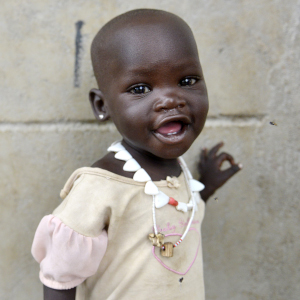
Why is Martin’s* mother smiling? Because, thanks to you, she had access to a Save the Children health center where her son was treated for life-threatening pneumonia in South Sudan. *Name changed for child’s protection.
-
 574,000 children healthy and nourished
-
 97,000 children educated and empowered
-
 81,000 children protected from harm
-
 58,000 children lifted from poverty
-
762,000 children aided in crisis
Our Work for Children in South Sudan
Save the Children worked in South Sudan prior to its independence in 2011, and we remain a leading charity for children’s humanitarian relief and development. In fact, we are the national focal point for family tracing and reunification, launching innovative approaches, as well as the lead health and nutrition provider in several South Sudanese states.
We provide South Sudan’s children with access to education, health care and nutrition support, as well as families with food security and livelihoods assistance. Our child protection programs support vulnerable children including former child soldiers and those affected by violence and displacement. We advocate for children’s rights at national, state and community levels.
In a country affected by regular outbreaks of conflict, food shortages and natural disasters such as floods, we are ready to respond to the needs of children and their families.
Here are some recent examples of our work:
A healthy start in life
- We're ensuring children in remote, low-resource settings get access to health care by training, supplying and supporting community health workers who can diagnose, treat and refer children for care before it’s too late
- We’re supporting maternal health through prenatal care, labor and delivery services and postnatal care services
- We’re running health centers and feeding program sites for infants and young children suffering from malnutrition
- We’re treating children for deadly diseases, like malaria, diarrhea and pneumonia, and delivering vaccinations
- We’re helping build the capacity of the government health ministry to prevent and address malnutrition
The opportunity to learn
- To make schools function for the future of children, Save the Children is stepping up to train and support teachers and distribute learning supplies so children can stay in school
- We’re supporting curriculum development at the national level, constructing classrooms, providing temporary learning spaces, implementing water, sanitation and hygiene programs, supporting early learning centers, training teachers and promoting community engagement – this includes early childhood care and development, basic education, pastoralist education and accelerated learning programs
- In 2019, we expanded our Healing and Education through the ARTS (HEART) program, supporting children affected by conflict, displacement and poverty
- We’re offering young people who dropped out of school, including girls who left education early to get married and former child soldiers, with access to practical courses in a variety of disciplines, including carpentry, masonry, hairdressing, agriculture and tailoring
- We’re providing vulnerable families with skills training, equipment and support to set up small businesses, including empowering farmers to increase what they grow and can sell at market by teaching agricultural techniques, as well as providing livestock and improving access to markets
Protection from harm
- Our work is focused on strengthening national systems to be able to address four key child protection issues: separated and unaccompanied children, children without appropriate care, economic and sexual exploitation of children and violence against children, including violence against children in armed conflict
- We are the national focal point for family tracing and reunification, working with community leaders, local authorities, armed forces, police, judiciary, teachers and children themselves to build the long-term child protection capacity of communities
- We’re advocating for a national minimum age for marriage
Innovation
- We worked with partners to develop, publish and pilot the Newborn Health in Humanitarian Settings: A Field Guide
- We’re launching a new app to help trace and reunify children and families, involving a database that frontline protection workers can update and monitor in real time, along with a first-ever case management handbook
Emergency response
- We preposition non-food items including shelter kits in areas that are vulnerable to conflict or natural disaster, and train partners and local government representatives in disaster risk reduction and emergency preparedness and response
- We’re providing refugee children with safe places to play and access to psychosocial support, have set up and conducted training on community-based child protection mechanisms, and are supporting the reunification of children who have been separated from their families
- Responding to the current hunger crisis, we’re assisting families through cash and food distributions, empowering them to meet their own needs and feed their families using available local resources
- We’re distributing emergency livelihood services to support pastoralists, including seeds, tools and livestock, plus veterinary services
- We responded to recent floods in areas without access to essential services, working with the government and local partners, to provide lifesaving food, water, medicine and other critical relief for children and their families
How to Help Children in South Sudan
You can create change that lasts a lifetime for children in South Sudan – in so many ways.

Donate
Support Save the Children’s mission. Donate to help children in South Sudan and around the world grow up healthy, educated and safe.

Join Team Tomorrow
Join Team Tomorrow and your monthly donation will go toward addressing the needs of children affected by today’s most urgent issues.

Browse the Catalog
Give a meaningful gift that will help transform children’s lives and futures in South Sudan and beyond. There’s something for everyone!
Sources: Facts and statistics have been sourced from Save the Children’s monitoring and evaluation experts, as well as our thought leadership publications, including our Global Childhood Report 2020 and Stop the War on Children 2020 report. Other sources include CIA World Factbook and BBC Country Profiles.
Photos: Tito Justin / Save the Children.
Thank you for signing up! Now, you’ll be among the first to know how Save the Children is responding to the most urgent needs of children, every day and in times of crisis—and how your support can make a difference. You may opt-out at any time by clicking "unsubscribe" at the bottom of any email.
By providing my mobile phone number, I agree to receive recurring text messages from Save the Children (48188) and phone calls with opportunities to donate and ways to engage in our mission to support children around the world. Text STOP to opt-out, HELP for info. Message & data rates may apply. View our Privacy Policy at savethechildren.org/privacy.